
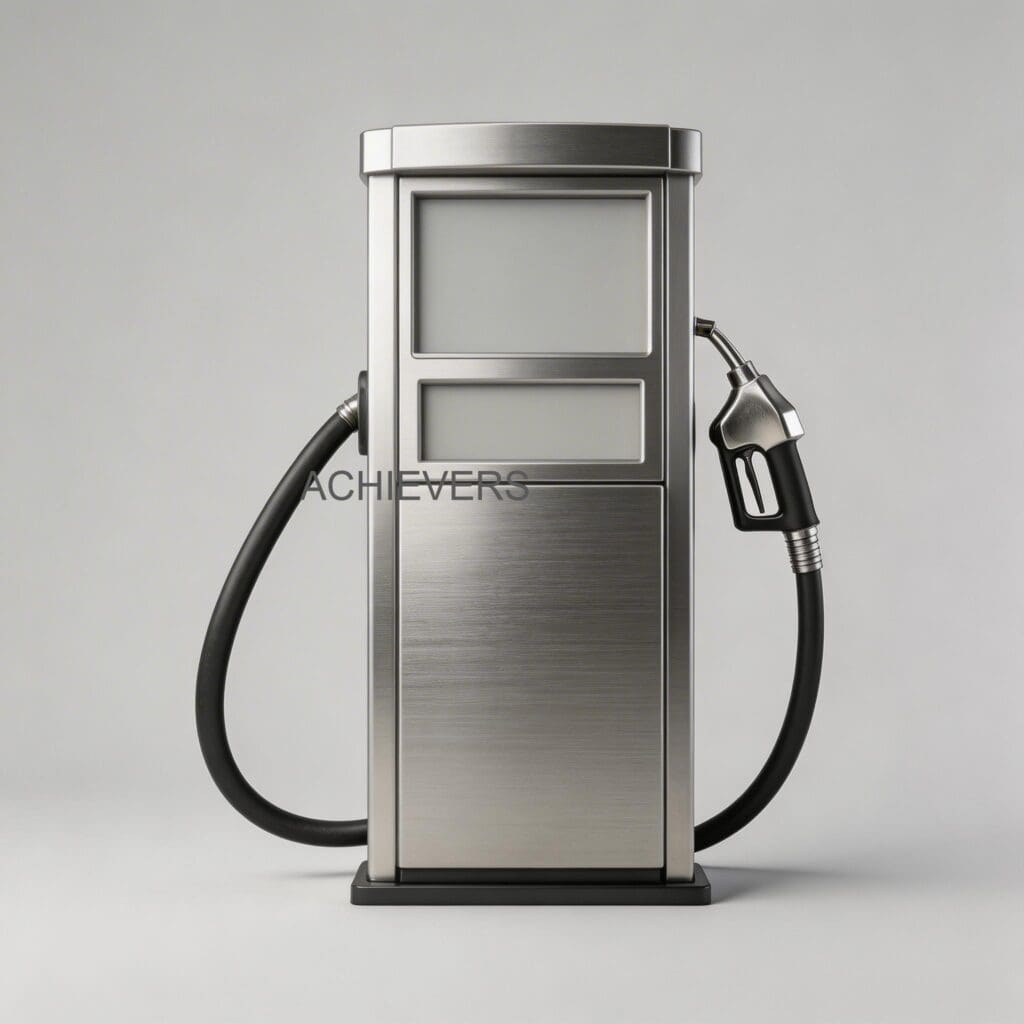
Indian industrial sites leak money through fuel pilferage, inaccurate manual dispensing, and unrecorded gravity-feed transfers. When you are burning thousands of liters of diesel daily to run generators, earthmovers, or fleet transport, a ±2% variance in fuel tracking isn't a rounding error—it is a massive financial hemorrhage.
Most plant managers and procurement heads look at fuel dispensing equipment as a strict capital expenditure (Capex). This is a mistake. Evaluating a fuel management upgrade requires a Total Cost of Ownership (TCO) and Return on Investment (ROI) approach. When you calculate the real cost of hardware, installation, calibration, and maintenance against the immediate reduction in fuel theft and spillage, the financial logic shifts completely. This analysis breaks down the actual numbers for the Indian industrial context.
QUICK REFERENCE: TCO AND ROI EVALUATION CHECKLIST
- [ ] Establish baseline daily diesel consumption in liters.
- [ ] Quantify current undocumented losses (spillage, over-dispensing, theft).
- [ ] Calculate potential annual savings at ±0.5% mechanical accuracy.
- [ ] Map out site preparation costs (civil pedestal, electrical line, canopy).
- [ ] Budget for secondary filtration (crucial for Indian fuel quality).
- [ ] Factor in annual Legal Metrology Act calibration costs.
- [ ] Include consumable replacements (hoses, auto-shutoff nozzles, filters) in Opex.
1. उत्पाद का अवलोकन और लागत संदर्भ
A true डीजल डिस्पेंसर is not just a pump and a hose. It is a highly accurate, metrology-approved accountability tool designed to dispense, measure, and record fuel transfers in harsh environmental conditions. Suitable for transport fleets, mining sites, and manufacturing plants, these systems replace chaotic manual drum-pumping with a controlled, pre-set process.
When you install a dedicated dispenser, you integrate a high-capacity pump, a positive displacement (P.D.) oval gear flow sensor, and an auto-shutoff nozzle. The immediate financial value comes from the flow sensor's precision (±0.5% accuracy) and the integrated one-touch receipt printer, which eliminates "ghost" fuel allocations and holds operators strictly accountable.
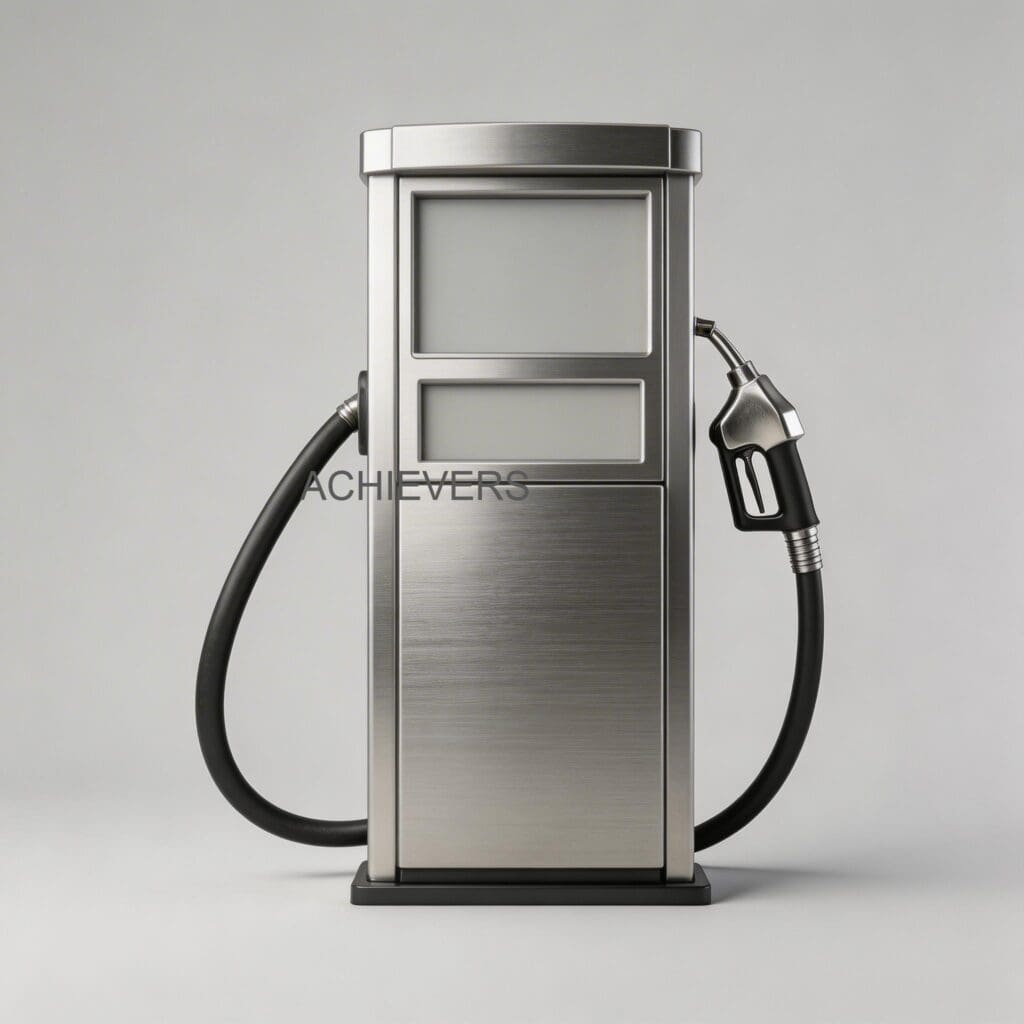
To understand the equipment you are budgeting for, refer to the core specifications that drive the cost and performance of a standard CE-130 model:
| विनिर्देश | Technical Value | Application Impact |
| — | — | — |
| प्रवाह दर | 60 लीटर प्रति माह से 200 लीटर प्रति माह तक | Determines fueling turnaround time for heavy fleets. |
| Measurement | P.D. Oval Gear Flow Meter | Ensures high precision regardless of fluid viscosity changes. |
| शुद्धता | ±0.5% Accuracy | Directly impacts ROI by reducing measurement discrepancies. |
| Power Rating | 0.375 kW (12V/24V DC or AC) | Dictates electrical load and backup power requirements. |
| कार्य का दबाव | 3 बार | Sufficient for long-hose applications (up to 4m standard). |
| Totalizer | 0-9999999 L (Cumulative) | Prevents tampering and tracks lifetime asset throughput. |
| Accessories | Metal gun, Brass fittings, 4m rubber hose | Ruggedized for Indian site conditions, minimizing replacement frequency. |
2. स्वामित्व की कुल लागत का विवरण
Procurement teams often reject equipment upgrades because they only look at the upfront invoice. A true TCO model factors in operational expenditures (Opex), statutory compliance, and planned downtime over a standard 5-year lifecycle. In the Indian market, where power quality and fuel contamination accelerate wear, budgeting for spares and maintenance is mandatory.
| लागत घटक | सामान्य सीमा (INR) | आवृत्ति | नोट्स |
| — | — | — | — |
| Hardware Capex | ₹75,000 – ₹2,50,000 | वन टाइम | Varies by flow rate (60 to 200 LPM) and preset/printer features. |
| Installation & Civil | ₹15,000 – ₹45,000 | वन टाइम | Concrete plinth, earth pit, and weather-protection canopy. |
| Electrical & Piping | ₹10,000 – ₹30,000 | वन टाइम | Cabling, MCBs, voltage stabilizers, and suction plumbing. |
| Metrology Calibration | ₹3,000 – ₹8,000 | हर साल | Mandatory Legal Metrology Act stamping to ensure ±0.5% accuracy. |
| Filter Consumables | ₹2,000 – ₹6,000 | द्वि-वार्षिक रूप | Essential to protect the oval gear meter from contaminated diesel. |
| Hose & Nozzle Spares | ₹5,000 – ₹12,000 | Every 18-24 months | Metal auto-shutoff nozzles and 4m rubber hoses wear out in rough sites. |
| Annual Maintenance (AMC) | ₹8,000 – ₹20,000 | हर साल | Preventive maintenance keeps downtime near zero. |
| Energy Consumption | ₹1,500 – ₹4,000 | हर साल | Minimal impact. 0.375 kW motor draws negligible power per transaction. |
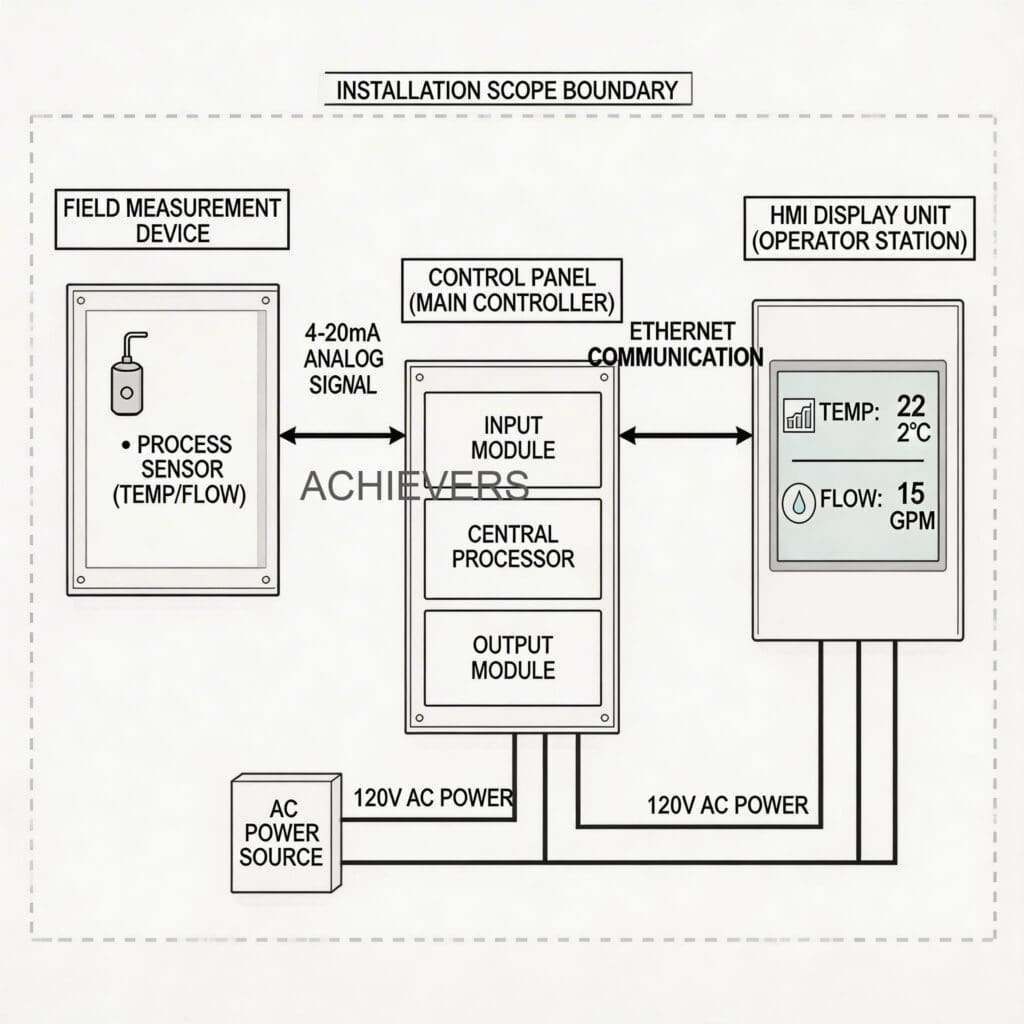
3. निवेश पर लाभ (आरओआई) की गणना: वास्तविक भारतीय उदाहरण
To justify the TCO, you must calculate the payback period based on theft reduction and accuracy gains. Let us evaluate a mid-sized Indian construction site operating heavy earthmovers.
- Establish the Baseline Consumption: The site consumes an average of 3,000 liters of diesel per day.
- Quantify Current Losses: Using a manual dipstick and a basic drum pump, the site experiences an average unaccounted loss of 2.5% due to over-dispensing (no auto-shutoff), manual recording errors, and outright pilferage.
- Calculate Daily Financial Bleed: 2.5% of 3,000 liters equals 75 liters lost per day. At an average industrial diesel price of ₹90 per liter, the daily loss is ₹6,750.
- Determine Annual Loss: Operating 300 days a year, the total unrecorded loss is ₹20,25,000 annually. This is pure cash leaking from the bottom line.
- Calculate Total Investment: The procurement team selects a heavy-duty डीजल डिस्पेंसर with preset capabilities and a printer for ₹1,80,000.
- Add Setup and Hidden Costs: Civil work, electrical stabilization, piping, and initial calibration add ₹40,000. Total upfront outlay is ₹2,20,000.
- Project Post-Installation Accuracy Savings: The new system's ±0.5% accuracy reduces the error margin strictly to 0.5%. The unaccounted loss drops from 75 liters to a maximum of 15 liters per day. Daily savings equal 60 liters (₹5,400). Annual savings equal ₹16,20,000.
- सरल प्रतिपूर्ति अवधि की गणना करें: Divide the Total Investment (₹2,20,000) by the Annual Savings (₹16,20,000). The result is 0.135 years. The equipment entirely pays for itself in just 1.6 months. Every month thereafter generates over ₹1.35 Lakhs in recovered operating capital.
4. लागत तुलना: उपलब्ध दृष्टिकोण
Plant managers must compare the डीजल डिस्पेंसर against both legacy methods and higher-end automation. While manual systems seem cheap, their hidden costs in fuel losses are astronomical.
| दृष्टिकोण | Upfront Cost | Annual Theft/Loss Cost | शुद्धता | Reliability | के लिए सर्वश्रेष्ठ |
| — | — | — | — | — | — |
| Manual Dipstick & Drum Pump | Extremely Low (Under ₹5,000) | Severe (High risk of pilferage) | Poor (±3% to ±5%) | Low (High human error) | Temporary, very low-volume sites. |
| Gravity Feed with Simple Meter | Low (₹10,000 – ₹25,000) | मध्यम | Moderate (±1% to ±2%) | मध्यम | Agricultural use, small static generators. |
| Standard Diesel Dispenser | Medium (₹75,000 – ₹2,50,000) | Very Low (Tight accountability) | High (±0.5%) | High (Rugged build) | Industrial plants, logistics fleets, mining. |
| Fully Automated FMS Station | High (₹4,00,000+) | Negligible | Very High (±0.2% to ±0.5%) | Very High | Massive transport hubs requiring RFID/cloud tracking. |
5. बजट में शामिल करने योग्य छिपे हुए खर्च
Indian industrial environments present unique challenges that can inflate operational costs if not proactively managed. A harsh climate, grid instability, and adulterated fuel require specific budgetary foresight.
- Civil Foundation and Canopy Construction: Indian monsoons and intense summer heat will degrade electronic displays and printers. Budget for a raised concrete pedestal to prevent waterlogging and a steel canopy to protect the preset keypad and one-touch printer from direct UV exposure.
- Power Conditioning and UPS: Rural industrial zones and mining sites suffer from severe voltage fluctuations. Even a robust 0.375 kW motor can burn out under phase imbalances. Budget for a dedicated voltage stabilizer and a small UPS to ensure the batch controller completes transactions during sudden blackouts.
- Advanced Secondary Filtration: Diesel delivered to Indian sites often contains high levels of particulate matter and suspended water. While the dispenser has internal reusable filters, budgeting for a high-capacity external water-separator filter extends the life of the sensitive oval gear flow meter.
- Statutory Calibration Overheads: Legal Metrology Act compliance is mandatory. Factor in not just the government stamping fee, but the logistical cost of bringing a certified calibration agency to your remote site annually.
- Consumable Wear and Tear: Rough handling by truck drivers and operators will eventually damage the 4m rubber hose and the brass fittings on the metal gun. Budget for one complete hose and auto-shutoff nozzle replacement every 18 to 24 months.
- Operator Training and Sabotage Repairs: When introducing tight fuel accountability, expect initial resistance. Budget for proper operator training on the preset functions, and maintain a contingency fund for minor repairs caused by deliberate "accidental" damage by personnel trying to bypass the new tracking system.
RED FLAG WARNING: THE BYPASS TRICK
Never install a high-accuracy dispenser without simultaneously securing the bulk storage tank's drain valves and top-fill hatches. Fuel thieves restricted by a new metered pump will simply bypass the equipment and drain fuel directly from the tank's water-drain valve. Complete ROI is only achieved when the dispenser is the only exit point for fuel.
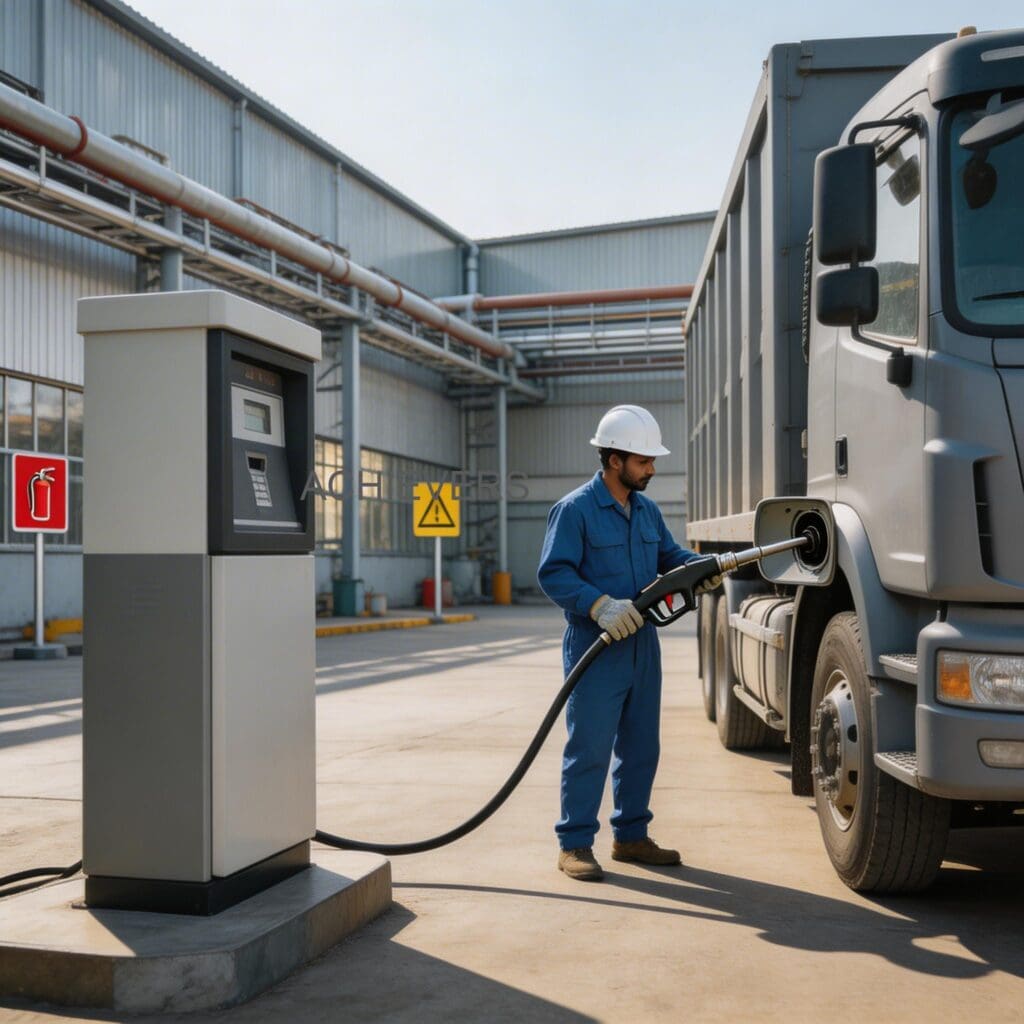
6. प्रबंधन के समक्ष खरीद को कैसे उचित ठहराया जाए
Procurement heads often face resistance from finance departments reluctant to approve a ₹2 Lakh expense for a "pump." You must present a business case rooted entirely in risk mitigation and cost recovery.
- Audit Current Baseline Measurement: Gather 30 days of fuel procurement invoices and compare them against recorded asset consumption logs. Identify the exact discrepancy volume.
- Detail the Exact Financial Bleed: Monetize that volume discrepancy using current local diesel prices. Show management exactly how much cash is vanishing per quarter.
- Highlight Statutory Compliance: Frame the upgrade around the Legal Metrology Act. Highlight that using uncalibrated setups for internal custody transfer poses compliance and audit risks.
- Propose the Full TCO: Do not hide installation or AMC costs. Present a complete 5-year TCO model so finance knows there will be no surprise budget requests later.
- Emphasize Ruggedness and Lifespan: Point out the CE-130's heavy-duty construction, oval gear counter, and resettable totalizer. Explain that this is industrial-grade infrastructure, not a consumable tool. (If management pushes back heavily on the full standalone station, propose starting with an inline डीजल फ्लो मीटर to establish tracking before upgrading to a full dispensing unit).
- Present the Sub-6-Month Payback Guarantee: Conclude your pitch with the ROI calculation. A CapEx request that demonstrably pays for itself in under half a year is rarely denied by competent financial controllers.
अक्सर पूछे जाने वाले प्रश्न
Q: How often must the flow meter be calibrated in India?
A: Under the Legal Metrology Act, fuel dispensing units used for custody transfer or strict internal accounting should be verified and stamped annually by a certified weights and measures inspector.
Q: Can the internal motor handle the voltage fluctuations common in rural industrial zones?
A: While the 0.375 kW motor is ruggedly built, it is highly recommended to install a dedicated voltage stabilizer. Continuous low voltage or sudden spikes will degrade the motor coils and electronic batch controller over time.
Q: What is the real-world accuracy of the oval gear flow meter?
A: The positive displacement oval gear sensor provides an accuracy of ±0.5%. Unlike turbine meters, this accuracy remains stable even if the diesel's viscosity changes slightly due to temperature drops during North Indian winters.
Q: Does the auto-shutoff nozzle work reliably with heavy-duty earthmover tanks?
A: Yes. The auto-shutoff mechanism senses the pressure change when fuel reaches the tip of the nozzle, preventing over-filling and spillage, which is vital for large, awkwardly positioned tanks on excavators and dumpers.
Q: Can we print receipts for driver accountability?
A: Yes, these systems feature a one-touch printer facility. The header can be customized to include your company name, and the long paper roll makes it easy to generate physical records for every vehicle fueled.
Q: Is the equipment compatible with biodiesel blends?
A: Standard diesel units handle conventional automotive diesel perfectly. If you are running specific high-percentage biodiesel blends, you must specify this during procurement, as biodiesel can degrade standard rubber seals over time, requiring specialized gaskets.
Q: What maintenance does the 60 LPM to 200 LPM pump require?
A: Routine maintenance involves cleaning the large capacity reusable internal filters to prevent cavitation, checking the brass fittings for weeping leaks, and ensuring the display electronics are kept free of heavy dust and moisture.
Stop letting fuel theft, spillage, and manual recording errors drain your operational budget. A precision Diesel Dispenser transforms your fuel storage into a highly secure, accountable asset with a measurable financial return. Contact our technical sales team today with your site conditions, required flow rates, and daily consumption volumes to configure a metrology-approved dispensing solution tailored to your plant.