
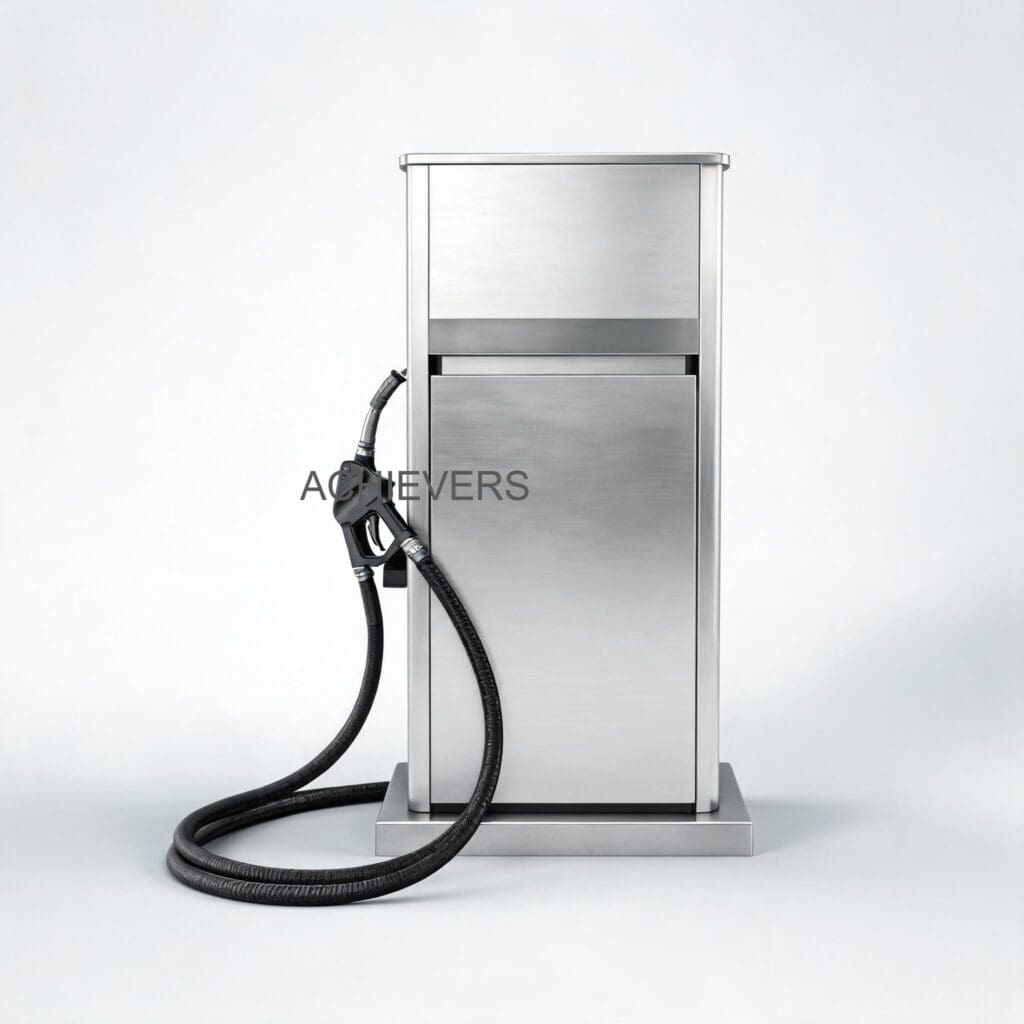
Running a cement plant in India means managing two critical high-volume resources: limestone and diesel. While the raw material goes into the kiln, thousands of liters of diesel go into heavy earth-moving machinery (HEMM), crushers, transit mixers, and dispatch truck fleets. If you cannot account for every liter dispensed per shift, you are bleeding operational capital. Manual logging, basic gravity-fed tanks, and unreliable mechanical meters in heavy-dust environments lead to an average of 3% to 5% unexplained fuel loss per month. At typical industrial volumes, that is lakhs of rupees wiped from your bottom line.
To stop pilferage, enforce shift-wise accountability, and accelerate fleet turnaround times, Indian site operators are standardizing their fuel management. Integrating a commercial-grade डीजल डिस्पेंसर into your quarry bowsers or stationary plant bunks is the most effective way to lock down your fuel issue.
QUICK REFERENCE: Cement Plant Fuel Lockdown Checklist
- शुद्धता: Mandate ±0.5% precision using Positive Displacement (Oval Gear) sensors.
- निस्पंदन: Ensure large-capacity reusable filters are installed to trap airborne cement dust and tank sludge.
- सत्यापन: Utilize one-touch customized receipt printers for driver/operator sign-offs.
- सुरक्षा: Standardize on auto shut-off nozzles to prevent tank topping spills.
- अनुपालन: Confirm Metrology Approval (Govt of India) for internal auditing and legal compliance.
1. Industry Overview: The Fluid Challenge
Cement manufacturing in states like Rajasthan, Chhattisgarh, and Andhra Pradesh presents one of the most hostile operating environments for fluid handling equipment. The air is thick with abrasive particulate matter. Ambient temperatures routinely exceed 45°C in the summer, followed by heavy monsoon humidity that corrodes standard mild steel equipment. Furthermore, remote captive power plants and mining blocks often suffer from severe grid voltage fluctuations.
Under these conditions, standard fuel pumps fail quickly. Rubber seals degrade, mechanical registers jam with micro-dust, and motors burn out due to unstable power. Meanwhile, operators dealing with manual dip-sticks or sight-glasses have a wide margin for "rounding errors"—a prime loophole for systemic fuel theft. You need a dispensing system explicitly designed with robust housing, filtered intakes, and tamper-proof cumulative registers to survive the cement plant ecosystem.
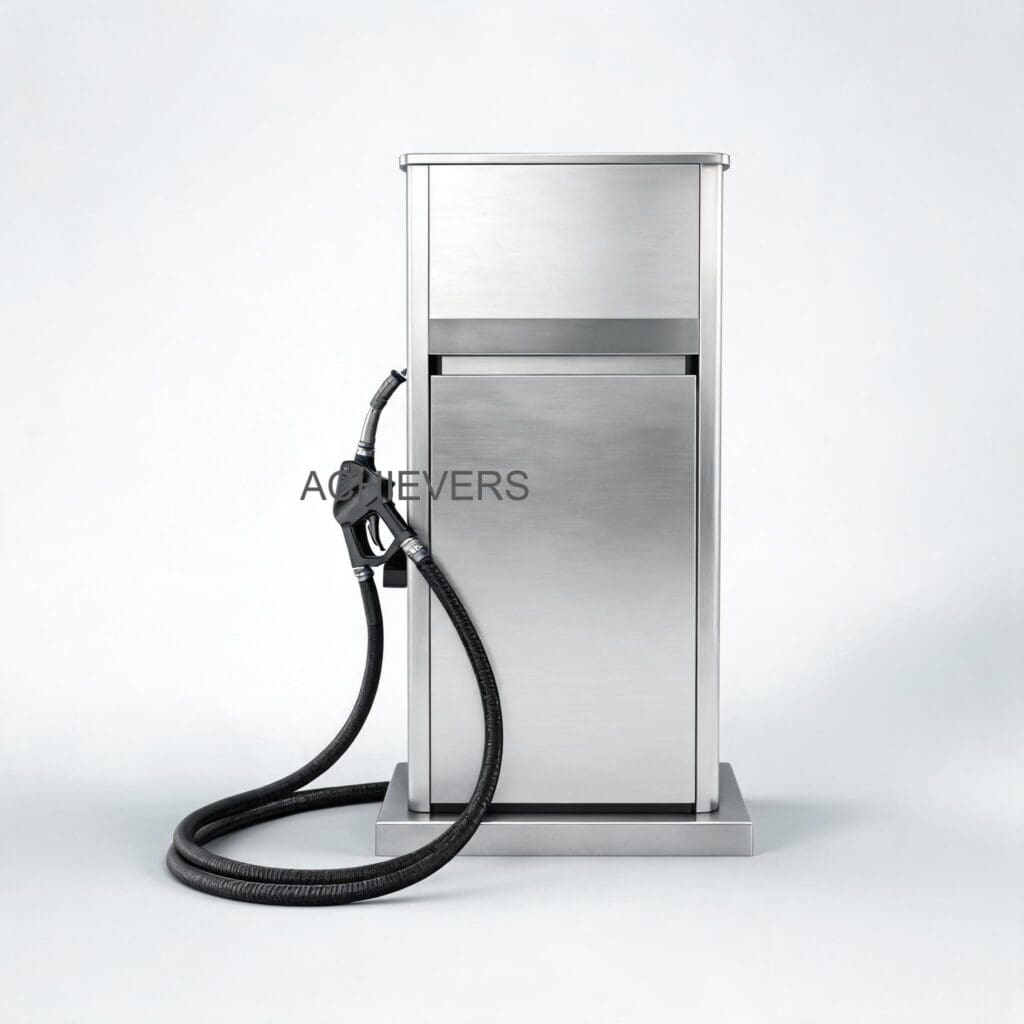
2. Product Capabilities Matched to Industry Needs
A standard retail petrol pump dispenser is over-engineered and improperly scaled for internal fleet use, while a basic transfer pump lacks the metering accuracy required for proper ERP reconciliation. The डीजल डिस्पेंसर bridges this gap, offering fixed-bunk capabilities with industrial ruggedness.
| Industry Requirement | Diesel Dispenser Feature | How It Addresses the Need |
| :— | :— | :— |
| High-Dust Environment | Rugged enclosed construction | Protects sensitive metering electronics and the 0.375 kW motor from abrasive cement and limestone dust. |
| Fast Turnaround for HEMM | 60 LPM to 200 LPM Pump Options | Reduces fueling time for loaders and 100-ton dumpers, minimizing queue times at the quarry bunk. |
| Micro-Theft Prevention | High-accuracy P.D. Oval Gear Sensor | Delivers ±0.5% precision, ensuring the exact volume dispensed matches the inventory drawdown. |
| Shift-Wise Reconciliation | One-touch printer & resettable batch | Generates physical proof of transaction (with customizable header) for the operator to sign before leaving the bay. |
| Spill Prevention | Auto shut-off metal nozzle | Automatically stops flow when the vehicle tank is full, preventing expensive and hazardous ground spills. |
| Contaminated Diesel Intakes | Large capacity reusable filters | Captures rust, suspended particulate, and sludge before it reaches the oval gear, preventing meter blockages. |
| Heavy-Duty Handling | 4-meter rubber hose with brass fittings | Provides necessary reach for awkwardly positioned heavy equipment tanks without degrading under harsh sun. |
| Audit & Compliance | Metrology Approved Models (CE-204) | Satisfies internal auditors and regulatory bodies regarding the accuracy of captive fuel consumption. |
Technical Specifications Profile
- मीडिया: Diesel
- मीटरिंग तकनीक: अंडाकार गियर प्रवाह मीटर
- Standard Flow Rate: 60 L/Min (High capacity up to 200 LPM available)
- Working Pressure: 3 बार
- Motor Power: 0.375 किलोवाट
- Precision: ±0.5%
- Inlet/Outlet Size: 25 मिमी
- Batch Totaliser: 0 – 9,999 L (Resettable)
- Cumulative Totaliser: 0 – 9,999,999 L (Non-resettable)
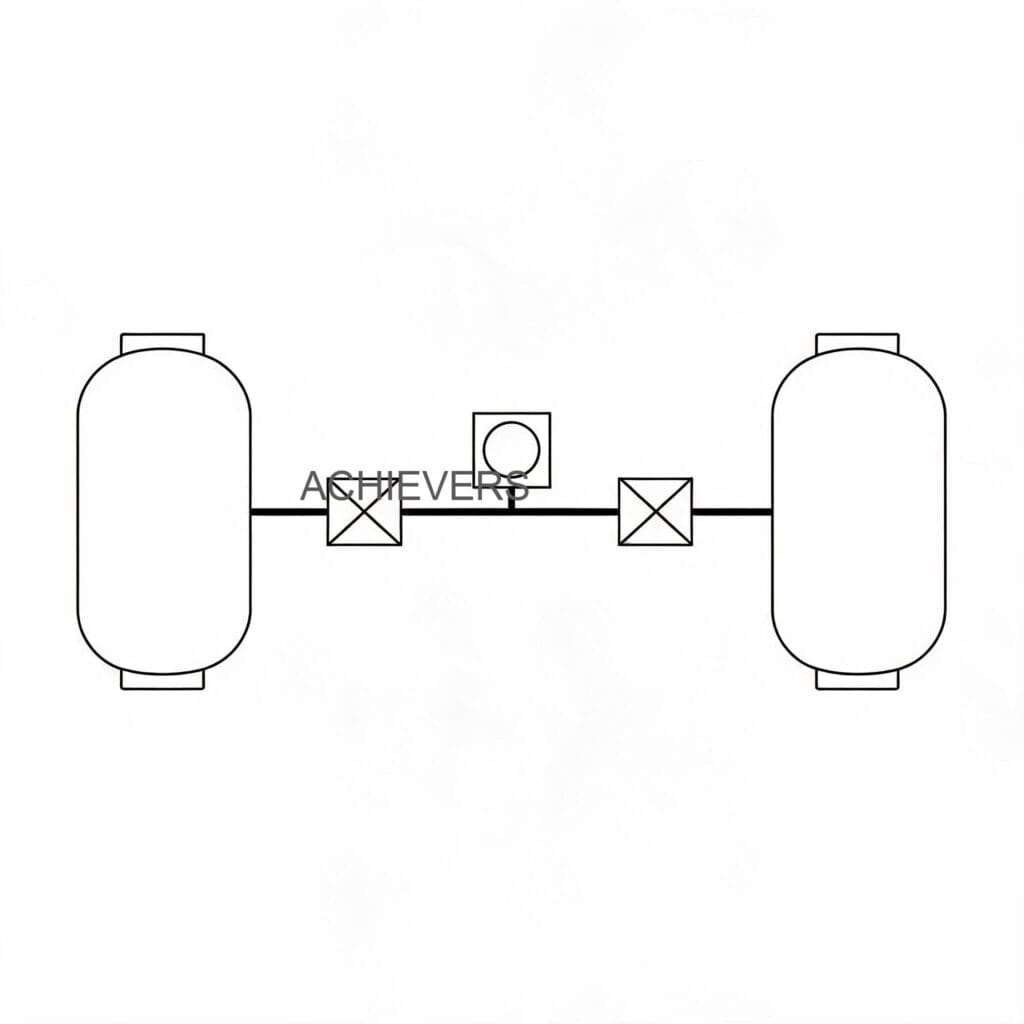
3. Typical Installation Scenarios in This Industry
Implementing a secure fueling network requires strategic placement of dispensing assets across the plant footprint.
Scenario A: The Mining Block Mobile Bowser
In deep limestone quarries, equipment cannot drive back to the main plant for fuel. The dispenser is mounted directly onto a 12V/24V DC or PTO-driven fuel bowser. The high-accuracy preset functionality allows the bowser operator to dispense exact daily quotas to excavators and blast-hole drills. The onboard printer issues immediate receipts, ensuring the bowser’s starting inventory minus receipts equals the end-of-shift remaining volume.
Scenario B: In-Plant Heavy Machinery Bay
Stationary skid-mounted tanks located near the crushing and grinding circuits are equipped with the standard डीजल डिस्पेंसर. Because these bays fuel loaders and forklifts operating on tight schedules, the 60 LPM flow rate with the 4-meter hose provides fast, drive-up service. The auto-shutoff nozzle is critical here, as concrete floors make spill cleanup hazardous and time-consuming.
Scenario C: Logistics and Dispatch Gate
Cement plants operating their own fleets of bulk carriers and flatbed trucks require a high-standing dispenser similar to a retail petroleum pump. Utilizing models like the CE-202 (Achievers), the dispenser is fixed at the exit gate. Trucks are fueled based on preset route allocations before dispatch.
4. Compliance, Accuracy, and Certification Requirements
Operating private fuel bunks in India requires strict adherence to safety and metrology standards. When bulk diesel is stored and dispensed, the Petroleum and Explosives Safety Organization (PESO) mandates specific clearances for tankage and piping layout.
Equally important is the Legal Metrology Act. If you are deducting fuel costs from sub-contracted transporters or charging different cost centers within your organization, your measuring equipment must be legally vetted. Models featuring Govt of India Metrology Approval (like the CE-204) give you absolute legal backing. The ±0.5% precision of the positive displacement flow sensor guarantees that internal audits align with bulk purchase invoices from oil marketing companies (OMCs).
🚨 PRO TIP: Do not install a high-accuracy dispenser without a dedicated primary water-separator filter between the bulk tank and the dispenser inlet. Indian bulk diesel often contains suspended moisture. Water passing through an oval gear meter will cause premature wear, throwing off your calibration by up to 2% over six months.
5. ROI and Operational Benefits
Upgrading from manual valves or rudimentary pumps to a fully integrated dispenser yields immediate financial returns. For sites dealing with legacy gravity tanks, simply adding a standalone डीजल फ्लो मीटर can help, but a full dispenser system provides the necessary control loop.
| Operational Benefit | Typical Improvement | Indian Industry Context |
| :— | :— | :— |
| Pilferage Eradication | 100% elimination of unrecorded issues | Stops the unauthorized siphoning of 10-20 liters per vehicle, saving ₹50,000+ monthly per fleet. |
| Shift Handover Speed | Reduced from 45 mins to 5 mins | No more manual dipstick math. The cumulative totalizer gives instant shift end readings. |
| Spill Reduction | 98% reduction in overfills | Auto-shutoff nozzles prevent the standard 2-3 liters spilled when topping off dumper tanks. |
| Data Accuracy | Shift to ±0.5% precision | Replaces visual sight-glass estimations, ensuring ERP data matches actual physical inventory. |
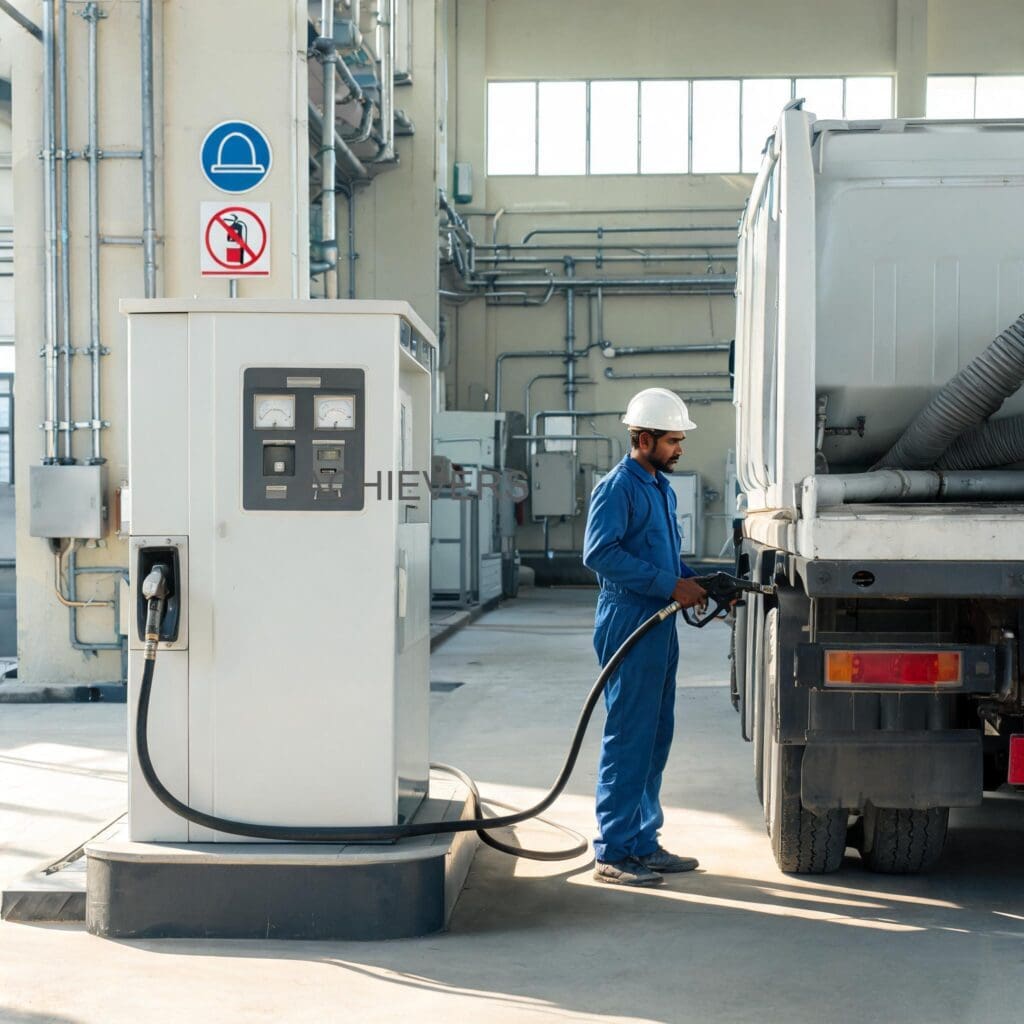
6. Selection Checklist for This Industry
Before finalizing a procurement order for a cement plant or mining site, ensure your specifications align with these field realities:
- Calculate Maximum Flow Rate Required: A 60 LPM pump is fine for forklifts and utility vehicles; specify a 150-200 LPM model for 100-ton mining dumpers to prevent staging delays.
- Verify Power Quality: Ensure the 0.375 kW motor is rated for the voltage fluctuations typical of Indian industrial grids, or opt for DC models for mobile bowsers.
- Specify Metering Technology: Demand Oval Gear Positive Displacement (P.D.) sensors. Turbine meters lose accuracy with viscosity changes due to temperature swings.
- Demand Auto-Shutoff Nozzles: Do not accept manual nozzles. The minor cost difference pays for itself in prevented spills during the first week.
- Check Filter Capacity: Ensure the unit has large-capacity reusable inline filters to handle contaminated bulk OMC deliveries.
- Confirm Totalizer Capacity: Ensure the cumulative totalizer reads up to 9,999,999 L so it doesn't roll over too frequently in high-volume plants.
- Hose Specifications: Mandate minimum 4-meter, steel-wire braided, synthetic rubber hoses capable of withstanding rough dragging over concrete and rocks.
- Require the Printer Module: The one-touch printer facility is non-negotiable for operator accountability. Ensure the receipt header can be customized to your company name.
Standard Operating Procedure for Shift-Wise Fuel Reconciliation
To maximize the value of your dispensing equipment, implement this strict 6-step SOP across all plant shifts:
- Pre-Shift Verification: The shift supervisor records the mechanical cumulative totalizer reading before any vehicle enters the bay.
- Vehicle Positioning & ID: The vehicle operator hands over the authorized fuel indent slip. The dispenser operator inputs the approved preset volume.
- Automated Dispensing: The operator inserts the nozzle and engages the trigger lock. The system automatically halts at the preset volume or when the tank is full via auto-shutoff.
- Receipt Generation: The dispenser prints the transaction receipt showing date, time, and exact volume down to the decimal.
- Dual Sign-Off: The vehicle driver and the pump operator both sign the printed receipt. The driver keeps one copy; the pump operator retains the master copy.
- End of Shift Audit: The supervisor checks the new cumulative totalizer reading. The difference must exactly match the sum of all signed receipts generated during that shift.
अक्सर पूछे जाने वाले प्रश्न
Q: Can the dispenser motor handle the frequent voltage drops common in remote Indian cement plants?
A: Yes, the standard 0.375 kW motor is ruggedized for industrial environments. However, for sites with severe and constant voltage fluctuations, wiring the dispenser through a dedicated industrial stabilizer is highly recommended to protect the electronics.
Q: Will airborne cement dust ruin the printer mechanism?
A: The dispenser housing is built robustly to protect internal components. To maximize the lifespan of the one-touch printer, keep the specialized weather flap closed when not actively printing, and routinely blow out the enclosure with compressed air during scheduled maintenance.
Q: What kind of paper does the one-touch printer use, and is it easy to source?
A: The system uses a high-quality thermal printer with a long paper roll. It utilizes standard industrial thermal roll sizes that are widely available across India and very easy to replace, minimizing operational downtime.
Q: Can we upgrade the 4-meter hose to a longer length for fueling difficult-to-reach mining equipment?
A: Yes, while 4 meters is standard, the system can be integrated with heavy-duty hose reels accommodating longer lengths. Ensure you specify the required length during ordering so the pump pressure can be calibrated accordingly.
Q: How frequently does the Oval Gear flow sensor require calibration?
A: For standard diesel dispensing, the ±0.5% precision holds exceptionally well. Under heavy industrial use, it is best practice to perform a volumetric proving test every 6 months, calibrating mechanically if necessary to meet internal audit standards.
Q: Can this equipment be mounted directly onto our existing mobile fuel bowsers?
A: Absolutely. Specifically designed DC models (12V/24V) are available for mobile applications. They offer the exact same preset and printing functionalities as the stationary bunks but run directly off the truck's battery or PTO system.
Q: Does the equipment require any special civil foundation for installation?
A: High-standing retail-style models require a standard concrete mounting plinth with anchor bolts for stability, exactly like a petroleum pump. Skid-mounted or barrel dispensers require minimal structural prep, just a level, vibration-free surface.
If your cement plant is losing money to poor fuel accountability, it is time to upgrade your infrastructure. Contact Chintan Engineers today with your total daily fuel consumption, fleet size, and specific site conditions (mobile bowser vs. fixed bunk), and our technical team will configure a dispensing system tailored to completely secure your operations.