
In the high-stakes environment of Indian industrial fuel handling, an unplanned breakdown of your fuel dispensing equipment doesn’t just pause operations—it bleeds money through idled fleets, delayed logistics, and untracked fuel losses. At Indian mining sites, construction depots, and manufacturing plants, equipment faces severe operating conditions: heavy particulate dust, temperatures exceeding 45°C, monsoon humidity, and frequent power voltage fluctuations. In these environments, run-to-failure is not a strategy; it is a financial liability.
Implementing a strict, calendar-based preventive maintenance (PM) schedule for your ईंधन डिस्पेंसर ensures an operational uptime exceeding 99% and guarantees that your volumetric readings remain legally and financially trustworthy. This guide provides a direct, technical blueprint for maintaining peak performance, covering everything from daily visual logs to quarterly positive displacement (PD) flow meter accuracy checks.
Quick Reference: Non-Negotiable PM Checklist
- Daily: Check for casing leaks, inspect the 4-meter rubber hose for abrasions, zero the display, test the auto-shutoff nozzle.
- साप्ताहिक: Clean the inlet strainer, check the micro printer paper roll, inspect the swivel joint.
- महीने के: Verify flow rate (up to 60 LPM), check air eliminator function, inspect flameproof motor connections (if AC powered).
- त्रैमासिक: Conduct volumetric accuracy checks (+/- 0.5% precision), calibrate the preset shutoff, inspect internal rotary gear pump seals.
1. Product Overview and Critical Wear Components
A commercial-grade ईंधन डिस्पेंसर is a compact, highly engineered fluid transfer system. It is designed to deliver metered fuel reliably, even when installed in tight spaces or deployed as a mobile diesel bowser. Understanding the technical architecture of your ईंधन डिस्पेंसर is the first step in diagnosing wear before it leads to failure.
The system relies on a hydraulically driven internal rotary gear pump (or vane pump) capable of handling up to 60 LPM. Fuel passes through an air eliminator—critical for stripping out fluid-gas mixtures so that the Positive Displacement Flow Meter only measures pure liquid. The digital terminal processes this data to provide highly accurate, preset batching and cumulative totalizing, complete with a micro printer for instant receipt generation.
Technical Specifications and Operating Limits
| विनिर्देश | Technical Details | Maintenance Implication |
| — | — | — |
| प्रवाह दर | Up to 60 LPM | Flow degradation indicates strainer blockage or pump wear. |
| शुद्धता | पढ़ने का +/- 0.5% | Requires quarterly calibration using Legal Metrology certified measures. |
| repeatability | +/- 0.1% of reading | High variance indicates air eliminator failure or damaged PD meter internals. |
| बिजली की आपूर्ति | AC 440V/220V or DC 24V/12V | Requires dedicated voltage stabilizers in Indian sites to protect the digital display. |
| Hose Assembly | 4-Meter Rubber Hose with Swivel | UV and physical abrasion wear; inspect daily. |
| Output Data | Backlit Display & Micro Printer | Thermal printer heads require dust removal; paper rolls must be kept dry. |
2. Preventive Maintenance Schedule
Proper maintenance requires accountability. Assign these tasks to specific maintenance personnel and log every intervention. This table outlines the mandatory maintenance schedule for dispensers operating in heavy industrial environments (handling ₹50,000+ of diesel daily).
| Task | आवृत्ति | Responsible | Est. Time | नोट्स |
| — | — | — | — | — |
| Visual Housekeeping & Leak Check | Daily | Pump Operator | 5 mins | Inspect nozzle, swivel, and ground beneath the dispenser for diesel weeping. |
| Display & Totalizer Verification | Daily | Shift Supervisor | 2 mins | Ensure backlit display is legible and batch totalizer resets correctly. |
| Hose Abrasion Inspection | Daily | Pump Operator | 3 mins | Check the 4-meter rubber hose for kinks, bulges, or exposed wire braiding. |
| Inlet Strainer Cleaning | Weekly | Maintenance Tech | 15 mins | Critical for dusty Indian sites. Removes rust and silica before it enters the gear pump. |
| Nozzle Auto-Shutoff Test | Weekly | Pump Operator | 5 mins | Dispense into a drum to verify the venturi sensor triggers shutoff automatically. |
| Micro Printer Servicing | Monthly | Admin/Tech | 10 mins | Clean thermal head with isopropyl alcohol; replace thermal paper roll if damp. |
| Air Eliminator Vent Check | Monthly | Maintenance Tech | 15 mins | Ensure the vent is clear of debris. Clogged vents force air through the meter, inflating readings. |
| Electrical Terminal Inspection | Monthly | Electrician | 20 mins | Check for loose connections, specifically in Flame Proof (FLP) motor enclosures. |
| Volumetric Accuracy Calibration | Quarterly | Certified Tech | 45 mins | Dispense 20L into a stamped standard measure. Adjust meter calibration if >0.5% off. |
| Pump Seal & O-Ring Inspection | Bi-Annually | Maintenance Tech | 60 mins | Open pump head; inspect rotary gear/vane tolerances and replace Viton seals. |
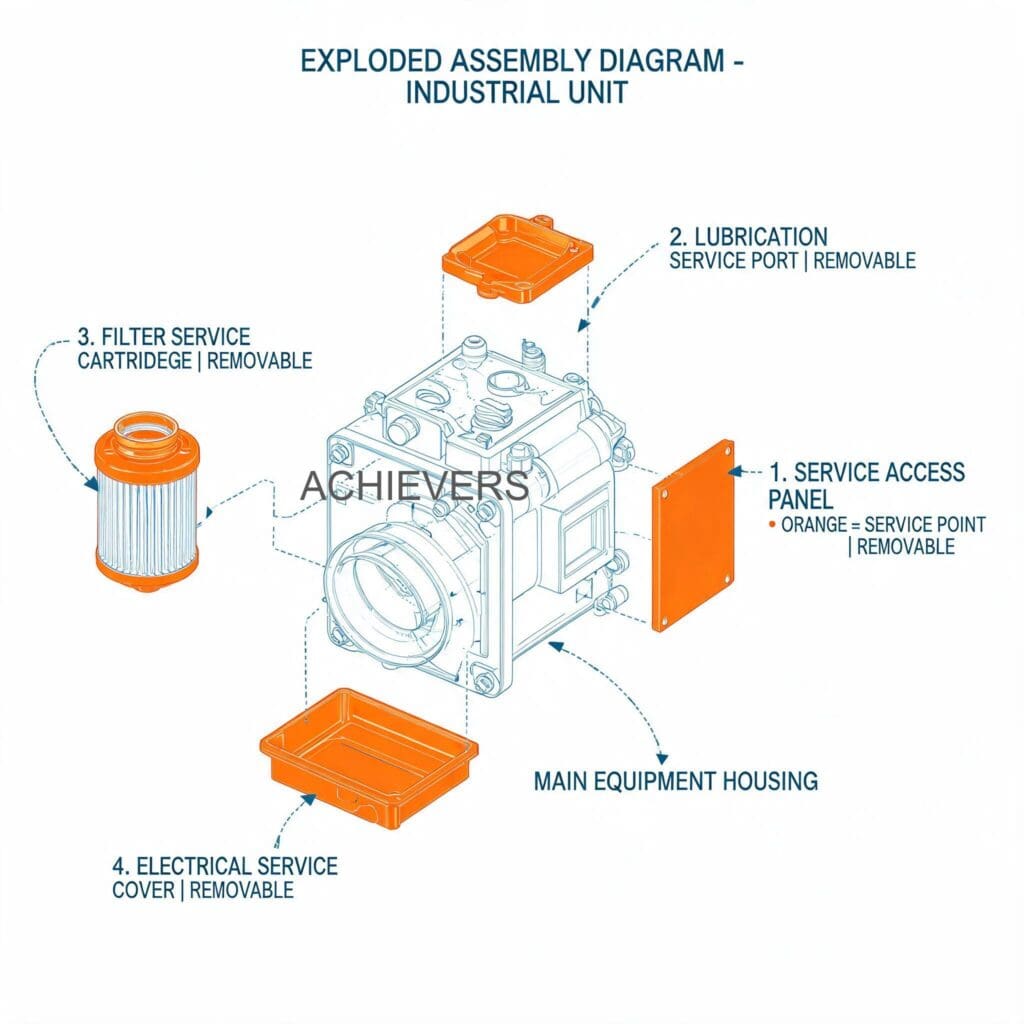
Pro Tip: Beating the Indian Monsoon
Moisture is the enemy of digital totalizers and thermal micro-printers. During the monsoon season, apply a thin coat of dielectric grease to all internal electrical terminals. Ensure the thermal paper rolls are stored in airtight, moisture-proof containers, as high humidity will ruin the paper’s chemical coating, leading to blank receipt printouts.
3. Step-by-Step Procedures for Key Tasks
Standard operating procedures (SOPs) eliminate guesswork. Follow these detailed steps to perform the most critical maintenance tasks safely and effectively.
Procedure 1: Weekly Inlet Strainer Cleaning
Contaminated fuel is the number one cause of internal rotary gear pump failure in India. The inlet strainer acts as the first line of defense.
- Isolate Power: Shut off the main electrical supply (AC 220V/440V or disconnect the 12V/24V DC battery line). Apply a Lockout/Tagout (LOTO) tag to the control panel.
- Relieve Line Pressure: Squeeze the auto-shutoff nozzle into a bucket to relieve any residual pressure in the 4-meter hose.
- Isolate Fuel Flow: Close the primary ball valve located between the storage tank (or bowser) and the dispenser inlet.
- Access the Strainer: Use a wrench to carefully unscrew the strainer housing cap. Keep a drip tray underneath to catch the approx. 200ml of diesel that will escape.
- Extract the Mesh: Pull out the stainless steel strainer mesh. Inspect it under a light for tears or warped wiring.
- Clean the Mesh: Wash the mesh in a basin of clean diesel or appropriate solvent. Use a soft-bristle nylon brush to dislodge embedded silica, rust flakes, and sludge. Do not use compressed air, which can damage fine meshes.
- Inspect the O-Ring: Check the housing cap O-ring for flattening or chemical swelling. Replace if any degradation is visible.
- Reassemble and Prime: Insert the mesh, tighten the cap, open the isolation valve, and turn on the power. Run the pump for 10 seconds into a test bucket to purge air and check for leaks at the cap seal.
Procedure 2: Quarterly Accuracy Check and Calibration
Discrepancies in your डीजल फ्लो मीटर cost you money. This check ensures your dispenser meets the +/- 0.5% precision specification.
- Prepare the Standard Measure: Procure a Legal Metrology certified 20-liter or 50-liter volumetric testing can. Ensure it is perfectly level and wet the inside with diesel, draining it completely before the test.
- Set the Preset: Program the digital dispenser terminal to a preset batch volume matching your testing can (e.g., 20 liters).
- Execute the Dispense: Place the nozzle deep into the testing can to minimize foaming. Squeeze the trigger and let the dispenser run until the auto-shutoff trips or the preset stops the flow.
- Settle the Foam: Wait 60 seconds for the diesel foam to dissipate inside the testing can.
- Read the Meniscus: Look at the sight glass on the neck of the testing can. The fluid level should rest exactly on the zero mark.
- Calculate the Error: If the fluid is above or below the line, read the milliliter scale. Divide the error by the total volume to calculate the percentage (e.g., 100ml error on 20L = 0.5%).
- Adjust the Calibration: If the error exceeds +/- 0.5%, access the electronic calibration menu on the terminal (or the mechanical adjustment screw on older PD meters). Adjust the k-factor according to the manufacturer's manual.
- Verify: Empty the can, let it drain, and repeat the 20L test to confirm the new calibration is perfectly accurate.
4. On-Site Spare Parts to Stock
Supply chain delays can turn a minor repair into a week-long outage. For sites operating heavy machinery or remote mining bowsers, keep a critical spares kit on-site. Do not rely on local hardware stores for precision dispensing components.
| Spare Part | Component Type | Recommended Qty | When to Replace |
| — | — | — | — |
| Strainer Mesh Screen | निस्पंदन | 2 | If wire mesh is torn or severely deformed. |
| Viton O-Ring Kit | Sealing | 2 sets | During bi-annual pump inspection or if leaks appear. |
| Auto-Shutoff Nozzle | Delivery | 1 | If venturi fails to click off, or spout is bent. |
| Thermal Printer Rolls | Electronics | 10 | Keep stocked continuously; replace when red warning line appears. |
| Rotary Pump Vanes/Gears | Pumping | 1 set | At 2-year interval or if flow drops below 40 LPM. |
| 4-Meter Rubber Hose | Delivery | 1 | If outer sheath cracks or braiding is exposed. |
5. Diagnosing Maintenance-Related Failures
When operators report issues, the root cause is usually a skipped maintenance task. Use this troubleshooting matrix to trace symptoms back to specific neglected PM tasks on your डीजल डिस्पेंसर.
| Failure Symptom | Missed Maintenance Task | Corrective Action |
| — | — | — |
| Flow rate drops to 15-20 LPM | Weekly strainer cleaning | Isolate system, open strainer housing, clean/replace mesh. Check suction line for kinks. |
| Pump runs but no fuel dispenses | Bi-annual pump seal inspection | Check for catastrophic air leak on suction side or sheared pump coupling. Replace seals. |
| Meter readings are artificially high | Monthly air eliminator check | Clean the air eliminator vent. Trapped air is pushing through the flow meter, inflating the total. |
| Nozzle overflows vehicle tank | Weekly nozzle auto-shutoff test | Clean the small venturi hole at the tip of the nozzle spout. If damaged, replace nozzle. |
| Printer outputs blank paper | Printer servicing / Storage check | Ensure paper roll is installed facing the correct way. If paper is damp, replace roll. |
| Display flickers or resets randomly | Electrical terminal inspection | Check for loose DC ground wire or AC voltage drops. Install a voltage stabilizer. |
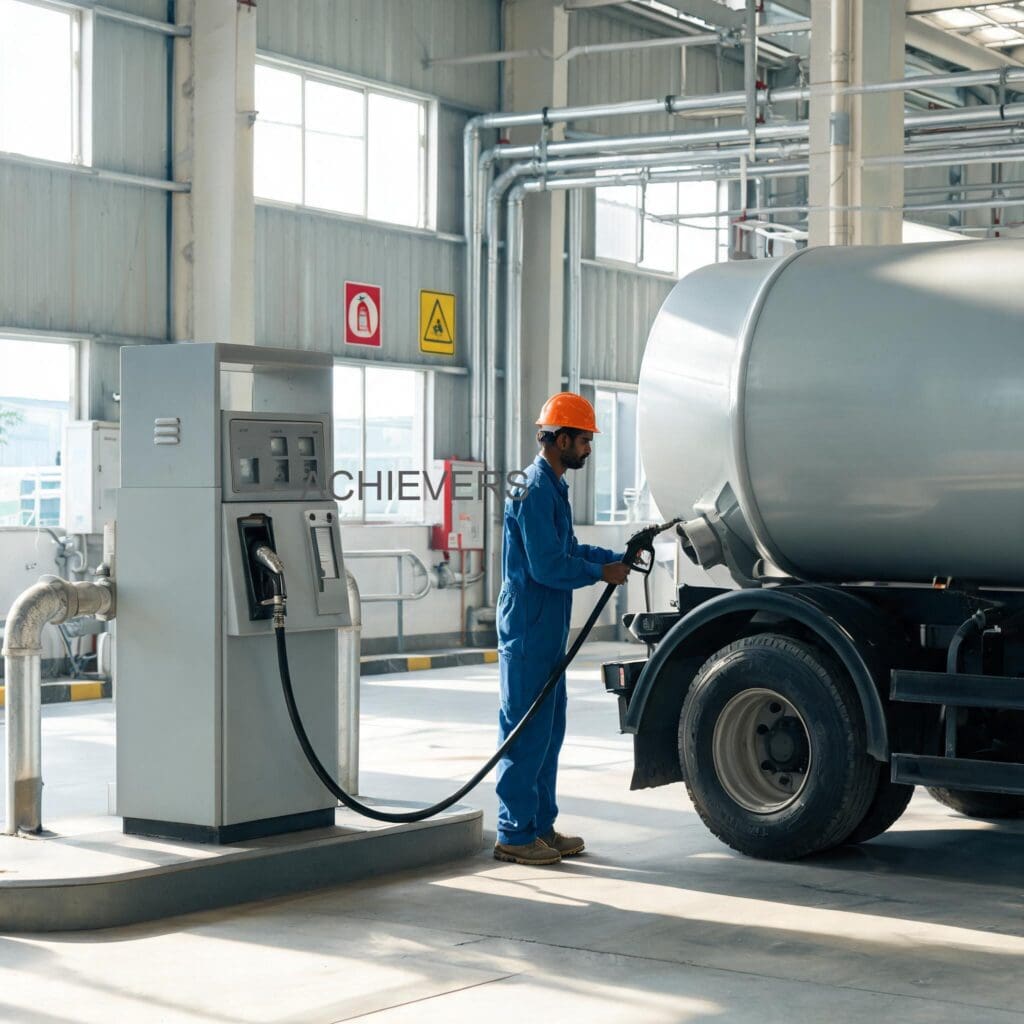
6. Extending Service Life in Indian Conditions
Operating industrial fluid transfer equipment in India requires defending against specific environmental threats. Standard manufacturer guidelines often assume temperate, clean environments. Here is how you adapt your PM schedule for ground reality.
Combating Extreme Heat (45°C+)
Direct sunlight on a dispensing unit bakes the electronic display, degrades the 4-meter rubber hose, and causes diesel to expand, which can trigger safety relief valves. Always install a basic tin or FRP canopy over stationary dispensing bays. For mobile bowsers, park the vehicle in shaded areas when not dispensing.
Managing Poor Power Quality
Industrial estates and remote construction sites often suffer from severe voltage fluctuations. A sudden spike from 220V to 280V AC will fry the digital terminal's motherboard. Always wire AC-powered dispensers through a dedicated CVT (Constant Voltage Transformer) or servo stabilizer. For DC battery-powered units (12V/24V), ensure the vehicle's alternator is not overcharging the battery, which can damage the pump's electric motor.
Dealing with High Dust and Particulates
Cement plants, mines, and unpaved depots generate massive amounts of abrasive silica dust. This dust settles on the nozzle. When the nozzle is inserted into a fuel tank, that dust gets washed into the vehicle, eventually clogging the vehicle's fuel filters. Install a tight-fitting rubber boot over the nozzle holster to keep the spout clean when not in use. Additionally, wipe down the digital display with a microfiber cloth daily—never use coarse rags that will scratch the backlit screen.
Water Contamination Management
During monsoons, water frequently enters underground storage tanks or mobile bowsers through poorly sealed breathers. Water passing through the dispenser will rust the internal components of the positive displacement meter. Utilize water-finding paste on your storage tank dipsticks daily. If water is detected, drain it from the tank before operating the dispenser.
अक्सर पूछे जाने वाले प्रश्न
Q: How often do I need to calibrate my dispenser to comply with Indian Legal Metrology laws?
A: Industrial users should conduct internal volumetric checks quarterly using a certified 20L measure. Official stamping and certification by the Legal Metrology Department must typically be done annually, depending on your state's specific regulations and whether you are selling fuel or just using it internally.
Q: The flow rate on our dispenser has suddenly dropped by half. What is the immediate fix?
A: The most common culprit is a blocked inlet strainer. Shut off the pump, open the strainer housing, and clean out the accumulated sludge and rust. If the strainer is clean, check the suction pipe for a collapsed wall or a blocked non-return valve.
Q: Can I use a standard 220V AC dispenser on a mobile bowser using an inverter?
A: It is highly discouraged due to power sine-wave issues and vibration. For mobile bowsers, you should specify a 12V/24V DC battery-powered unit or a hydraulically driven P.T.O. system specifically designed to handle vehicular movement and direct DC power.
Q: Why is my micro printer giving a faded or completely blank printout?
A: Thermal printers do not use ink. Faded prints usually mean the thermal paper roll has absorbed ambient humidity, which ruins the heat-sensitive coating. It can also occur if the paper roll is inserted backward. Swap in a fresh, dry roll and test again.
Q: Is the 4-meter rubber hose repairable if it gets cut or punctured?
A: No. High-pressure diesel delivery hoses contain internal wire braiding for static dissipation and pressure handling. Patching or taping a cut hose is a massive fire and environmental hazard. A damaged hose must be entirely replaced.
Q: The auto-shutoff nozzle keeps clicking off immediately, even when the tank is empty. Why?
A: The venturi sensing port—a tiny hole near the tip of the nozzle spout—is blocked by dirt, dried diesel gum, or foam. Clean the hole with a fine wire or compressed air. If it still malfunctions, the internal diaphragm is torn and the nozzle must be replaced.
Q: What maintenance is required for the Positive Displacement (PD) Flow Meter inside the unit?
A: The PD meter is highly sensitive. Beyond ensuring the upstream strainer is clean to prevent debris from scoring the internal measuring gears, the meter requires no daily physical maintenance. Never open the PD meter housing yourself; if it fails, it requires factory-level recalibration and servicing.
To stop losing money to inaccurate fueling and preventable breakdowns, upgrade your site with robust, low-maintenance dispensing equipment today. Contact Chintan Engineers with your flow rate requirements, power availability (AC/DC/PTO), and site conditions to receive a technical consultation and quote for a system engineered specifically for Indian industrial demands.