
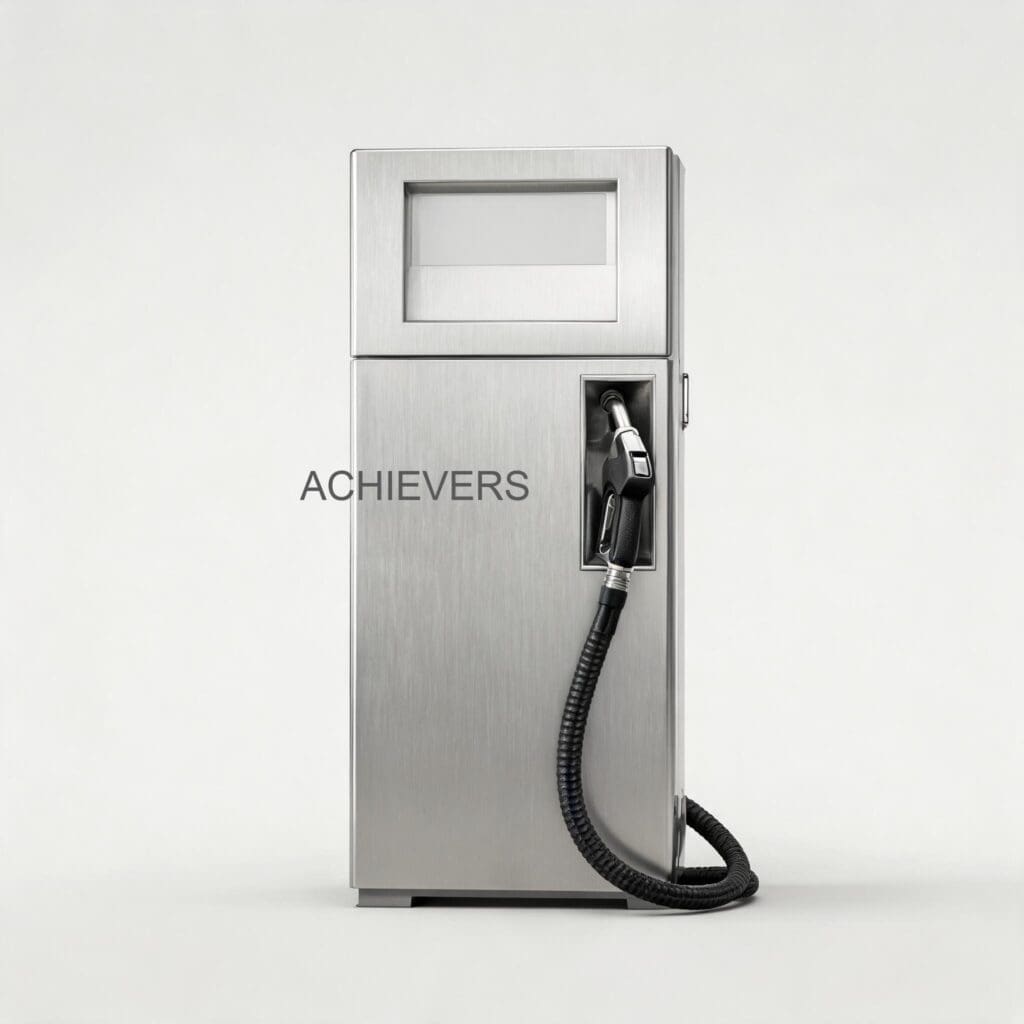
Fuel is often a top-three operating expense for heavy industrial sites, yet many plant managers and fleet operators rely on uncalibrated transfer pumps or inaccurate manual logging. This approach bleeds profit through inventory shrinkage, unrecorded dispensing, and topping-off spills. When managing a high-volume fuel bay, equipment accuracy and reliability translate directly into financial performance.
This technical breakdown quantifies where a Diesel Dispenser actually returns money to your operation. We will detail the diesel dispenser ROI for industrial fuel bays, covering pilferage control, issue reconciliation, flow speed optimization, and maintenance downtime reduction.
Quick Reference: Core ROI Drivers
- Shrinkage Elimination: ±0.5% precision via Positive Displacement (PD) flow sensors.
- Spill Prevention: Auto shut-off nozzles eliminate tank-topping overflows.
- Throughput: 60 to 200 LPM flow rates reduce heavy asset queuing time.
- Accountability: Dual registers (resettable batch and cumulative totalizer) force strict reconciliation.
1. Product Overview and Cost Context
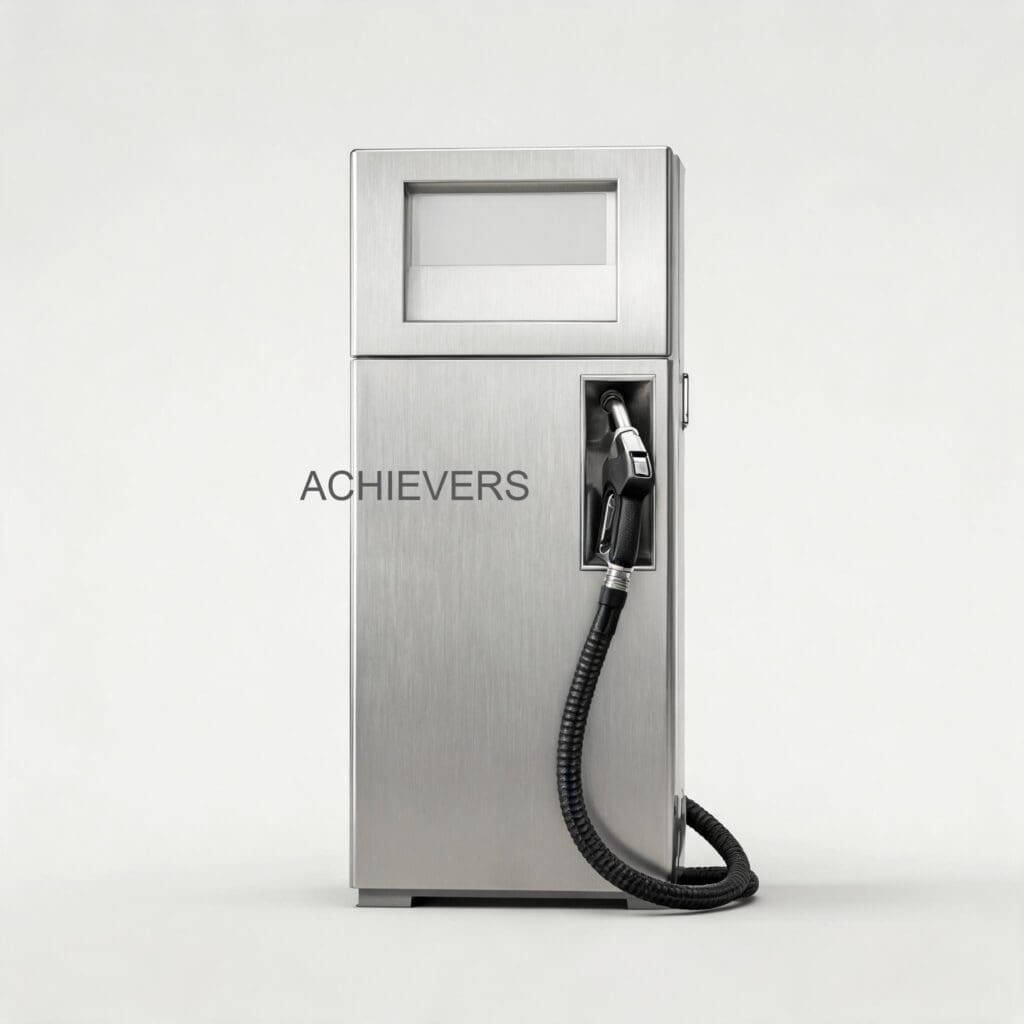
An industrial Diesel Dispenser is engineered to establish complete control over fuel utilization in harsh environments. Unlike basic transfer pumps, these systems integrate a high-capacity pump, a precision measurement unit, and delivery hardware into a single robust housing. They are designed for facilities operating their own fleets—including heavy trucks, buses, forklifts, and industrial cranes.
The core financial value of the equipment lies in its metrology. Utilizing an oval gear flow meter configuration, the unit achieves a measurement precision of ±0.5%. This eliminates the "grey area" in fuel accounting where shrinkage traditionally occurs.
Key Technical Specifications:
| Specification | Operational Limit / Value | |
| — | — | |
| Flow Rate Range | 60 L/Min up to 200 L/Min (Application dependent) | |
| System Precision | ±0.5% | |
| Flow Meter Technology | Oval Gear Positive Displacement (PD) | |
| Working Pressure | 3 Bar | |
| Pump Power | 0.375 kW | |
| Inlet / Outlet Size | 25 mm | |
| Totaliser Limits | Batch: 0-9999 L \ | Cumulative: 0-9999999 L |
2. Total Cost of Ownership Breakdown
Evaluating the diesel dispenser cost benefit requires looking past the initial capital expenditure (CAPEX). You must quantify the Total Cost of Ownership (TCO) over a typical 5-to-10-year lifecycle. The table below outlines the expected cost components in a global industrial context (values are representative estimates in USD).
| Cost Component | Typical Range (USD) | Frequency | Notes |
| — | — | — | — |
| Base Equipment (CAPEX) | $1,500 – $4,500 | Initial | Varies by capacity (e.g., Model CE-130 to CE-204). |
| Installation & Piping | $500 – $1,200 | Initial | Includes rigid piping, isolation valves, and electrical drops. |
| Commissioning & Calibration | $300 – $600 | Initial | Required to certify the ±0.5% metrology standard. |
| Operational Consumables | $50 – $150 | Bi-annual | Replacement of internal high-capacity reusable filter elements. |
| Annual Maintenance (AMC) | $200 – $500 | Annual | Routine inspection of the internal Diesel Flow Meter, pump, and seals. |
| Power Consumption | $30 – $80 | Annual | Minimal draw (0.375 kW) makes energy costs negligible. |
| Periodic Recalibration | $100 – $300 | Annual | Critical to maintaining ROI; ensures zero drift in measurement. |
| Wear Item Replacement | $80 – $200 | Every 2-3 years | Replacement of the 4m rubber hose and brass fittings. |
3. ROI Calculation: Real-World Industrial Example
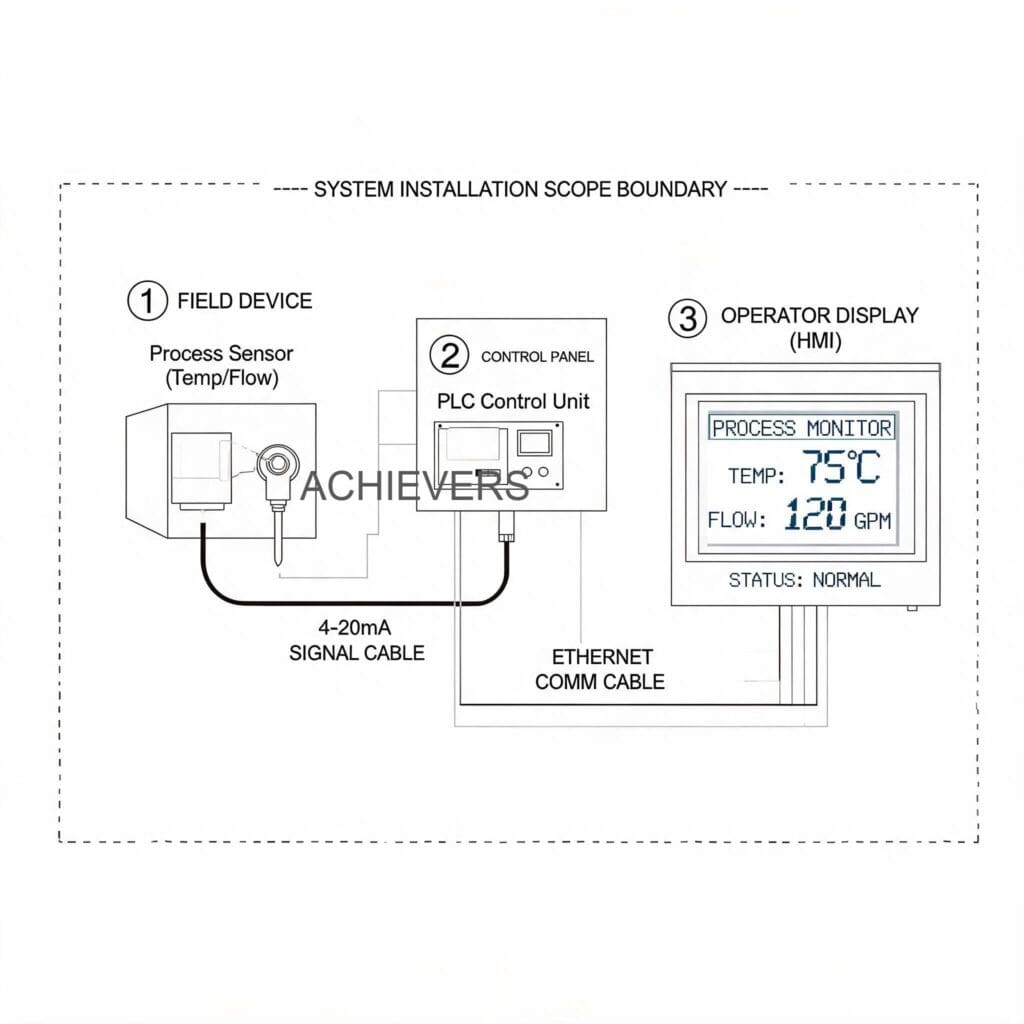
To generate an accurate diesel dispenser payback period calculation, use this step-by-step framework based on a mid-sized heavy machinery depot.
- Establish Baseline Volume: Calculate your total monthly fuel transfer. Example: A depot dispensing 100,000 liters of diesel per month.
- Identify Shrinkage Rate: Audit your current bulk tank drops versus logged vehicle consumption. Manual or unmetered systems typically see a 3% to 5% loss due to unrecorded issues, spills, and pilferage. Example: 3% loss = 3,000 liters unaccounted for monthly.
- Assign Fuel Value: Multiply lost volume by your bulk fuel cost. At $1.00 per liter, that is $3,000 in monthly shrinkage.
- Determine Downtime Costs: Calculate the financial impact of assets queuing. Upgrading from a 40 LPM basic pump to a 150 LPM dispenser saves roughly 15 minutes per 500L truck fill. For 10 trucks a day, that recovers 2.5 hours of productive asset time daily.
- Sum Annual Losses: $3,000/month x 12 = $36,000 in annual direct fuel loss, excluding recovered asset time.
- Input Equipment Costs: Assume an installed equipment cost of $3,500 for a ruggedized 120 LPM dispenser system.
- Project Post-Installation Savings: The ±0.5% precision of the new dispenser reduces shrinkage from 3% to 0.5%. The new monthly loss is just 500 liters ($500), saving you $2,500 per month ($30,000 annually).
- Calculate Simple Payback: Divide the total installed cost by the monthly savings. $3,500 / $2,500 = 1.4 months. The system pays for itself in under 45 days.
4. Cost Comparison: Available Approaches
Plant managers frequently ask an industrial diesel dispenser supplier for alternatives to reduce upfront CAPEX. The table below illustrates why cutting corners on dispensing infrastructure ultimately destroys capital.
| Approach | Upfront Cost | Annual Cost | Accuracy | Reliability | Best For |
| — | — | — | — | — | — |
| Manual Gravity/Drum Transfer | Very Low | Very High (Labor + Loss) | None | High Spillage | Remote emergency fills only. |
| Basic Transfer Pump (No Meter) | Low | High (Unaccounted Fuel) | None | Moderate | Agricultural use, low-volume transfer. |
| Third-Party Commercial Fueling | Zero | Highest (Retail Margins) | Certified | High | Light fleets without yard space. |
| Industrial Diesel Dispenser | Moderate | Low (High Efficiency) | ±0.5% | Very High | Fleet depots, mines, industrial plants. |
Red Flag Warning:
Never bypass the dispenser's built-in filtration systems to increase flow speed. Dispensing unfiltered diesel directly into modern Tier 4 engine equipment will destroy high-pressure common-rail injectors. The resulting maintenance costs and equipment downtime will instantly wipe out your fuel savings. Always utilize the large-capacity reusable filters installed before the dispensing point.
5. Hidden Costs to Budget For
When you buy diesel dispenser for fleet depot operations, CAPEX is only the beginning. To avoid budget overruns, factor in these operational and site-specific hidden costs:
- Power Quality Conditioning: Industrial sites often suffer from voltage fluctuations. Installing surge protection and dedicated power conditioning is mandatory to protect the dispenser's electronics and 0.375 kW motor.
- Hazardous Area Compliance: If operating in a zone designated as hazardous (ATEX environments), explosion-proof conduit and specialized electrical glanding will increase installation costs.
- Spill Containment Civil Works: Modern environmental regulations require hardstand concrete pads and interceptor drains at the dispensing bay to catch accidental hose ruptures.
- Filtration Upgrades: If your bulk tank suffers from water ingress or algae, you may need to install an upstream fuel polishing unit before the fuel reaches the dispenser to prevent rapid filter clogging.
- Periodic Metrology Certification: To maintain accountability, the oval gear flow meter must be tested against a certified volumetric prover annually, requiring outsourced calibration lab fees.
- Operator Training: Switching from manual logs to an automated preset dispenser requires procedural training to ensure drivers correctly input batch resets and secure the metal gun nozzle properly.
6. How to Justify the Purchase to Management
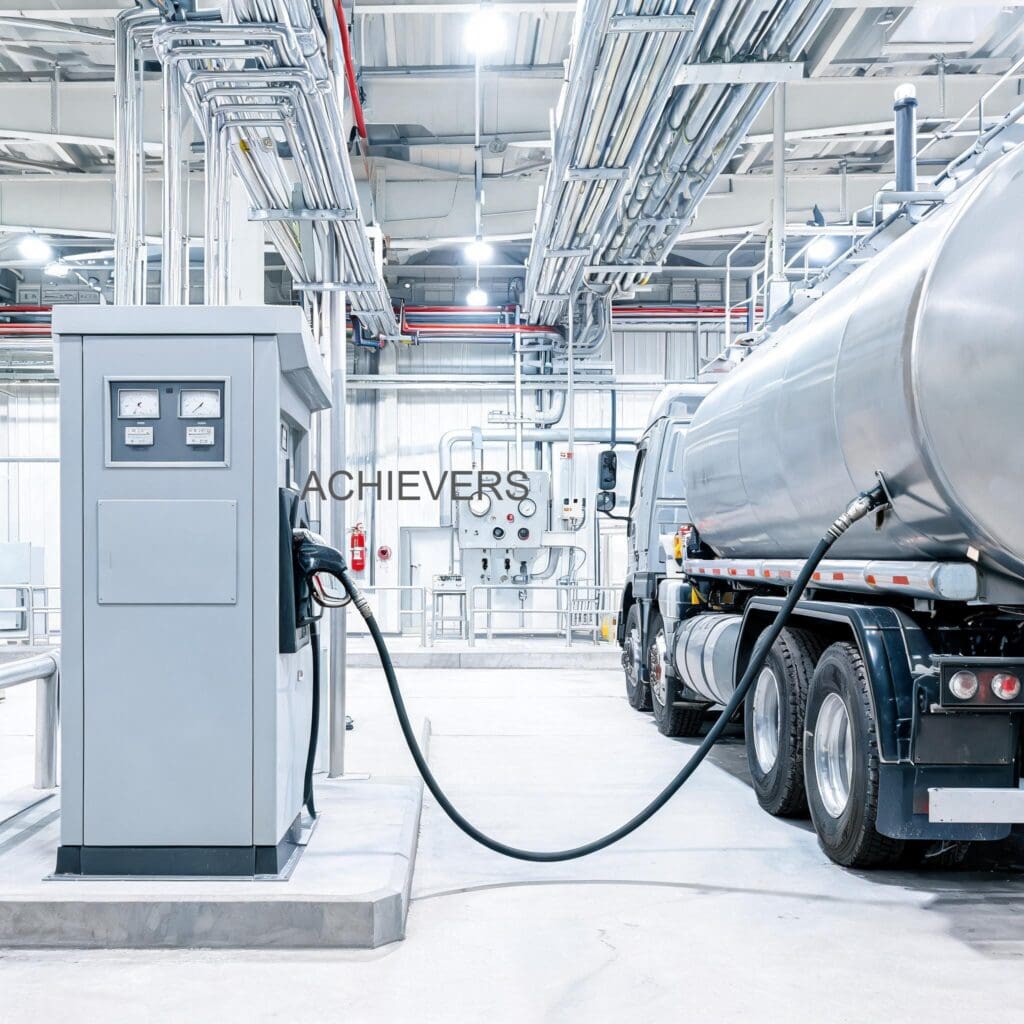
Procurement heads require hard data. Use this sequence to secure capital approval for dispensing infrastructure:
- Establish the Baseline Measurement: Provide three months of bulk fuel purchase invoices side-by-side with your fleet’s logged consumption to expose the existing volume gap.
- Quantify the Financial Leakage: Convert that volume gap into actual currency lost over a 12-month period.
- Benchmark Dispensing Speed: Present the labor and asset downtime costs of your current slow-fill methods. Show how moving to a 60-200 LPM system keeps heavy machinery in production rather than idling at the fuel bay.
- Highlight Regulatory Compliance: Emphasize that modern dispensers feature robust construction designed to withstand harsh environmental conditions while preventing reportable environmental spills via auto shut-off nozzles.
- Deliver the Payback Equation: Present the ROI calculation framework from Section 3. Emphasize that the equipment transitions from a capital expense to a net-positive revenue protector within the first financial quarter.
- Detail Risk Reduction: Frame the equipment as a risk mitigation tool that enforces absolute operational accountability and prevents large-scale fuel theft.
Conclusion
Upgrading your site's fuel infrastructure is a math equation where the results are immediate and highly visible. By replacing uncalibrated pumps with precision equipment, you immediately neutralize shrinkage, eliminate spills, and recover thousands of hours of asset downtime. Stop managing your highest consumable expense blindly and enforce strict volumetric control today.
FAQ
Q: What flow rate should I select for my facility?
A: For light commercial vehicles and forklifts, a 60 LPM setup is optimal to prevent back-splashing. For heavy earthmoving equipment and large transport trucks, specify models capable of 150 to 200 LPM to minimize asset queuing time.
Q: Can this equipment operate in extreme temperatures?
A: Yes. The robust construction is engineered to sustain operations in effectively harsh environmental conditions without sustaining damage to the pump or internal flow sensors.
Q: How accurate is the measurement system over time?
A: The system uses an oval gear positive displacement counter that provides ±0.5% precision. Maintaining this accuracy requires routine annual calibration to account for internal wear.
Q: Does the system stop automatically when the vehicle tank is full?
A: Yes. The included metal gun features an auto shut-off nozzle specifically designed for safe tank topping-up, preventing costly and hazardous overflows.
Q: What is the maximum limit of the totalizer?
A: The system features a one-time batch count range up to 9,999 liters (which is resettable), and a secure cumulative totalizer that records up to 9,999,999 liters for long-term reconciliation.
Q: What media is this dispenser designed for?
A: These units are strictly specified for applicable media like Diesel and Biodiesel. Utilizing them for highly volatile fluids like gasoline requires entirely different ATEX-rated explosion-proof internal architectures.
Q: Is the internal filter reusable?
A: Yes. The dispensers are integrated with large-capacity reusable channels designed to separate fuel contaminants before administering, minimizing long-term consumable costs.
Ready to gain absolute control over your fuel inventory? Contact the technical sales team at Chintan Engineers to discuss your exact site requirements, flow capacity needs, and machinery profiles to spec the perfect dispensing solution for your facility.