
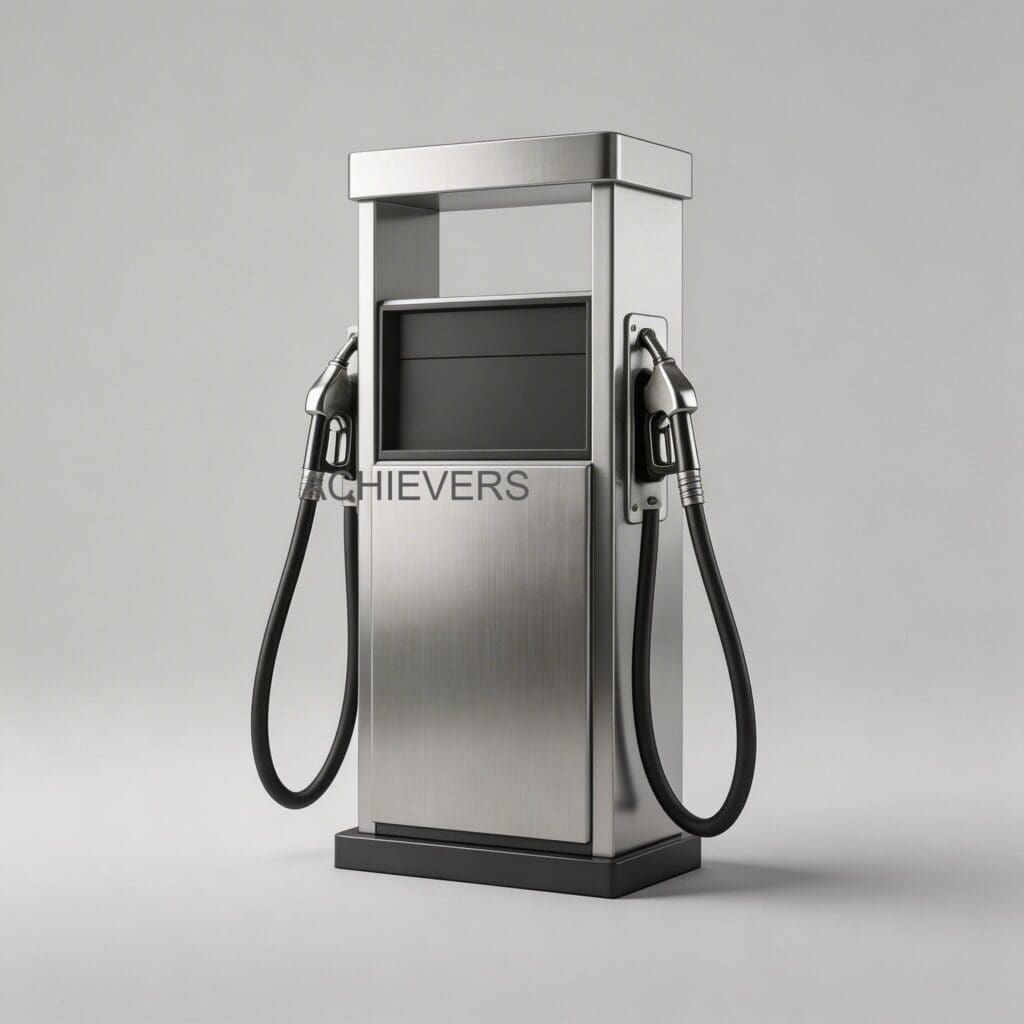
Industrial fleets and remote plant operations leak capital at the point of fuel transfer. Every unmetered drop, undocumented vehicle top-up, or inaccurate paper log translates directly to unrecoverable operating expenditure (OpEx). If you operate heavy plant equipment, generators, or fleet vehicles, you need a quantifiable baseline to stop this shrinkage.
This analysis breaks down the total cost of ownership (TCO) for a high-grade industrial dispensing setup and calculates your return on investment (ROI) through absolute loss prevention and precision flow control. We are moving past generic estimates to provide a blunt, technical payback model that justifies procurement to management across multi-site global operations.
Quick Reference: TCO & ROI Checklist
- [ ] Baseline current fuel losses (reconcile storage shrinkage vs. actual equipment consumption).
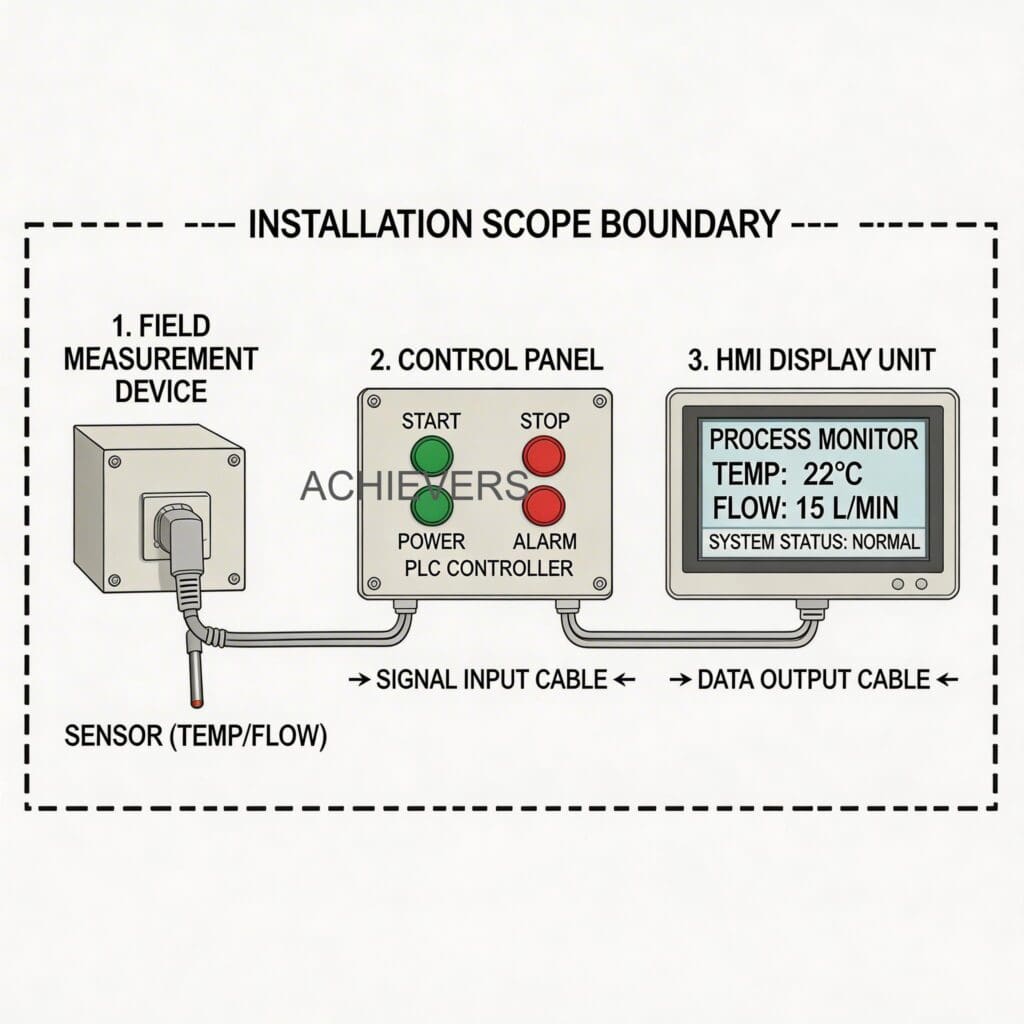
- [ ] Assess site infrastructure (AC 220V/440V grid availability vs. DC 12V/24V mobile truck setups).
- [ ] Verify site hazardous area compliance requirements (ATEX, CE, API, ISO standards).
- [ ] Audit current manual logging errors vs. automated micro-printer receipt workflows.
- [ ] Calculate total daily dispensing volume (Liters Per Minute/Day) to model your simple payback period.
1. Product Overview and Cost Context
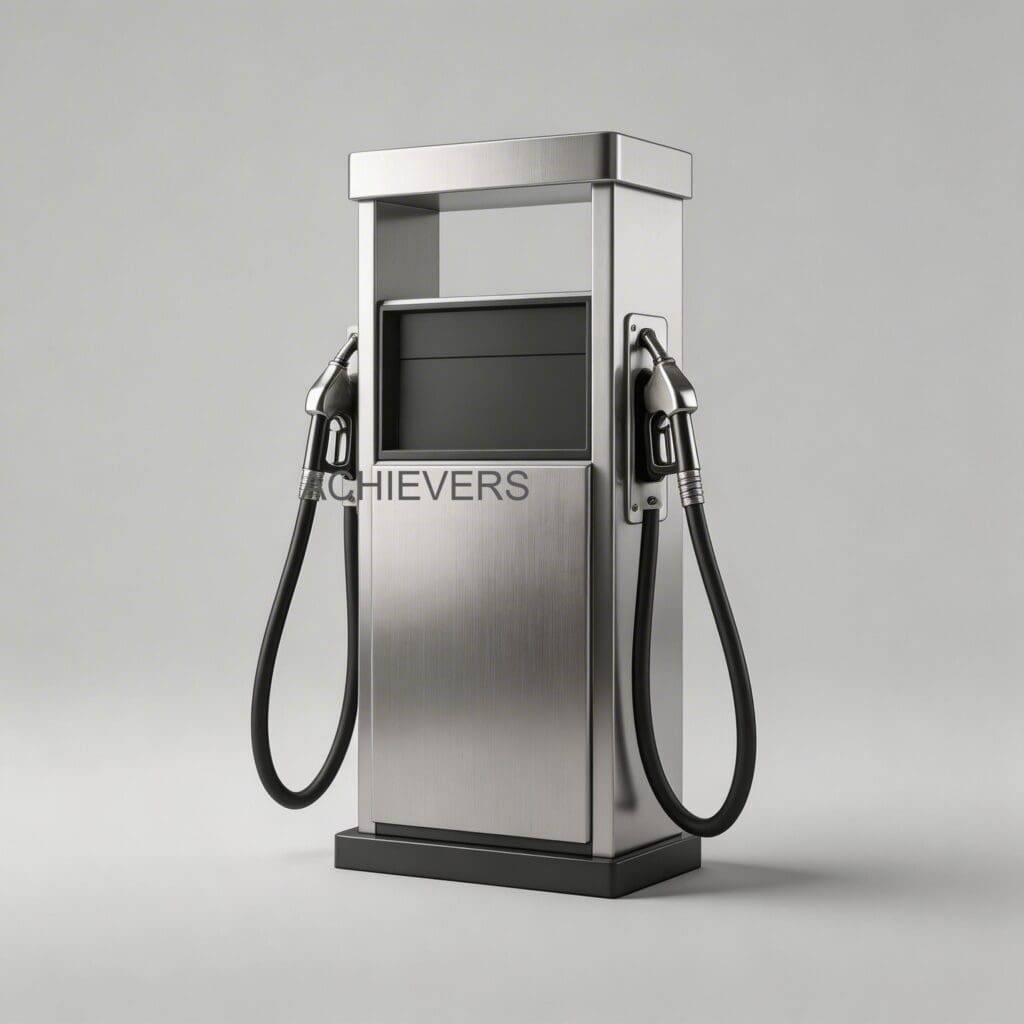
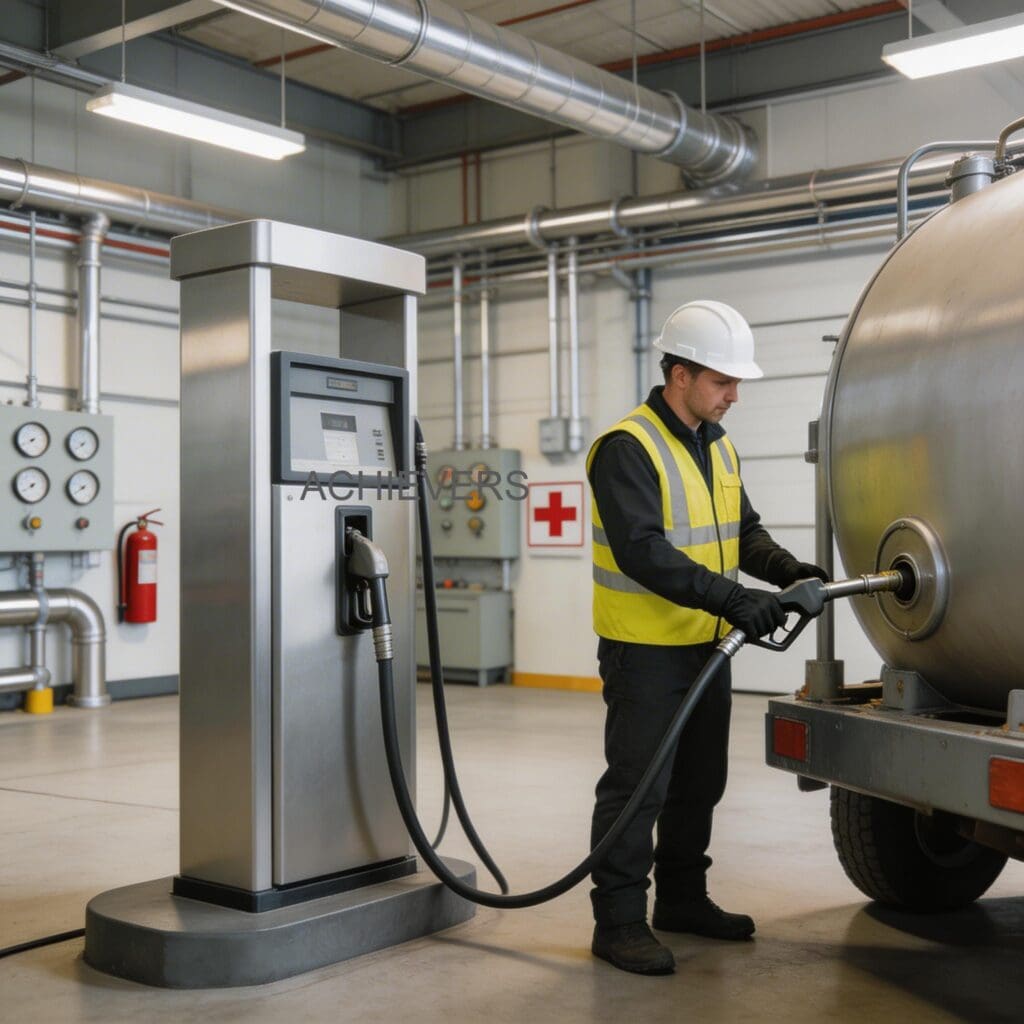
An industrial Fuel Dispenser is a rugged, demountable apportioning unit designed for high-accuracy fluid transfer in challenging environments—such as construction sites, mining operations, and large-scale manufacturing plants.
Unlike basic transfer pumps, a dedicated Fuel Dispenser integrates hydraulic and digital components to eliminate human error and fluid theft. The system utilizes either an internal rotary gear pump or a vane pump paired with a positive displacement flow meter. Because positive displacement meters trap and measure absolute fluid volumes rather than inferring velocity, they deliver exceptional accuracy (+/- 0.5% with +/- 0.1% repeatability).
To ensure measurement integrity, the unit includes a built-in air eliminator. This prevents the meter from registering fluid-gas mixtures, guaranteeing that your total delivery measurement remains exact even if air enters the upstream suction hose. Integrated preset dispensing and micro-printers issue instant receipts, creating an immutable audit trail for every liter transferred.
2. Total Cost of Ownership Breakdown
Evaluating a Fuel Dispenser requires looking beyond the initial capital expenditure (CapEx). True TCO includes installation, power, ongoing calibration, and potential downtime.
| Cost Component | Typical Range (USD) | Frequency | Notes |
| — | — | — | — |
| Initial Purchase (CapEx) | 1,500 – 4,500 | One-time | Varies by power type (AC/DC) and flow capacity (up to 60 LPM). |
| Site Installation & Commissioning | 300 – 800 | One-time | Includes piping connections, mounting, and initial flow calibration. |
| Consumables (Filters & Paper) | 50 – 150 | Annual | Replacement of built-in strainer elements and thermal printer paper. |
| Periodic Meter Calibration | 100 – 300 | Annual | Required to maintain +/- 0.5% accuracy per ISO compliance. |
| Energy Consumption | 20 – 60 | Annual | Highly efficient DC 12V/24V or AC 220V/440V power draw. |
| Wear Parts (Nozzle/Hose) | 150 – 250 | 2-3 Years | Replacement of the 4-meter rubber hose and auto-shutoff nozzle. |
| Annual Maintenance Contract (AMC) | 200 – 500 | Annual | Preventative maintenance for the rotary gear/vane pump and air eliminator. |
| Downtime per Failure Event | 500 – 2,000+ | Variable | Cost of idle plant equipment if the dispensing system fails. Minimized by robust construction. |
Red Flag Warning:
Never install a fuel metering system without an integrated air eliminator in high-draw industrial tanks. As tank levels drop, suction lines often pull in air pockets. Without an air eliminator, standard meters will count this air as fluid, artificially inflating your consumption metrics by up to 4% and ruining your financial reconciliation.
3. ROI Calculation: Real-World Industrial Example
To build a definitive business case, you must calculate the simple payback period. Here is an 8-step ROI calculation based on a mid-sized global mining site operating heavy machinery.
- Identify Daily Volume: The site dispenses 5,000 liters of diesel per day to excavators and dump trucks.
- Calculate Current Shrinkage: Reconciliations show a 3% discrepancy between bulk tank depletion and manual equipment logs (due to spillage, inaccurate gravity filling, and undocumented top-ups).
- Quantify Daily Fluid Loss: 3% of 5,000 liters equals 150 liters lost per day.
- Convert to Financial Loss: At an estimated global industrial diesel cost of 1.10 USD per liter, the site loses 165 USD per day, or roughly 4,950 USD per month.
- Establish Investment Cost: Procuring and installing a high-grade digital dispenser, complete with a positive displacement Diesel Flow Meter, auto-stop nozzle, and micro-printer, totals approximately 3,500 USD.
- Apply Accuracy Improvement: The new system features +/- 0.5% accuracy and an automated printed audit trail. Shrinkage drops from 3% to 0.5%.
- Calculate Recovered Capital: Saving 2.5% of daily volume (125 liters) equals 137.50 USD saved per day, or 4,125 USD recovered per month.
- Determine Payback Period: Divide the total investment (3,500 USD) by the monthly savings (4,125 USD). The equipment achieves full ROI in less than 1 month (approx. 26 days). After day 26, the reduced shrinkage translates to pure operational savings.
4. Cost Comparison: Available Approaches
Evaluating your current fueling method against available upgrades clarifies the operational advantages of a fully integrated dispensing system.
| Approach | Upfront Cost | Annual Maintenance Cost | Accuracy | Reliability | Best For |
| — | — | — | — | — | — |
| Manual Gravity Feed (Unmetered) | Very Low | Near Zero | Very Poor | Moderate | Small, non-critical backup sites. |
| Standard Transfer Pump (Analog) | Low | Low | +/- 2.0% | Moderate | Low-volume transfer where audit trails are not required. |
| Flow Meter Integration Only | Medium | Low | +/- 1.0% | High | Retrofitting existing Diesel Dispenser setups. |
| Digital Dispenser with Micro-Printer | High | Medium | +/- 0.5% | Very High | High-volume industrial fleets requiring instant reconciliation and security. |
5. Hidden Costs to Budget For
Procurement teams often miss secondary expenses that impact the overall budget during site upgrades. When calculating your TCO, factor in these specific line items:
- Hazardous Area Certification Upgrades: Operating in explosive atmospheres (e.g., refineries or underground mining) requires flameproof (FLP) motors and ATEX-certified electrical components, which carry a premium over standard units.
- Calibration Laboratory Access: To maintain ISO quality standards and +/- 0.5% accuracy, meters require periodic certification using master meters or certified volumetric proving cans.
- Power Conditioning: In remote regions with unstable AC grids, voltage fluctuations can damage digital backlit displays and micro-printer logic boards. Budget for dedicated surge protection or rely on 12V/24V DC battery-powered options.
- Piping and Flange Modifications: Upgrading to an integrated system may require modifying existing upstream strainers, non-return valves, and tank outlet flanges to handle the pump's suction requirements without cavitating.
- Operator Training: Shift workers must be trained on utilizing preset batch functions, reading the cumulative totaliser, and replacing micro-printer paper to prevent downtime.
- Logistics for Spares: Importing proprietary replacement parts (like specialized internal rotary gears or high-capacity filter elements) incurs duties and shipping delays. Utilizing suppliers with robust local distribution networks mitigates this risk.
6. How to Justify the Purchase to Management
Engineers and site managers must frame the procurement of premium dispensing equipment not as an infrastructure cost, but as an immediate risk reduction strategy. Use this 6-step procedure to secure budget approval:
- Establish the Baseline: Gather bulk delivery invoices for the last 90 days and compare them against the logged fuel consumption of your fleet.
- Quantify the Variance: Highlight the absolute volume of unaccounted fuel (shrinkage).
- Project the Financial Hemorrhage: Multiply the missing volume by the current market cost of fuel to show the annualized cash loss.
- Present the Technical Solution: Propose the automated dispensing unit, highlighting key features: auto-stop nozzles (prevent spills), air eliminators (prevent false readings), and the micro-printer (eliminates manual log falsification).
- Demonstrate the Payback Timeline: Use the ROI calculation model from Section 3 to prove that the system pays for itself (usually within 1 to 3 months).
- Highlight Extended Warranties: Emphasize the standard 1-year warranty and the optional 2-year extended warranty to assure management that maintenance costs will remain predictable.
FAQ
Q: Can this equipment run off a service vehicle's battery for remote fueling?
A: Yes. The system is available in 12V and 24V DC configurations. It can be trickle-charged from a service truck's alternator, allowing it to act as a fully mobile bowser unit for remote heavy equipment.
Q: What happens if the upstream tank runs completely dry?
A: The system is equipped with a built-in air eliminator and strainer. If the line pulls air, the eliminator purges the gas so the positive displacement meter does not record false volume.
Q: What flow rates can I expect from the integrated pump?
A: The internal rotary gear or vane pump provides up to 60 Liters Per Minute (LPM). This is optimized for fast, safe filling of mid-to-large capacity vehicle tanks without excessive foaming.
Q: Do I need to buy a separate hose and nozzle?
A: No. The standard setup is a complete dispensing arrangement that includes a 4-meter rubber delivery hose, a swivel joint to prevent kinking, and an auto-shutoff nozzle to prevent tank overfilling.
Q: How do we track fuel usage across different operator shifts?
A: The digital display features both a resettable batch totalizer (for individual shift or vehicle tracking) and a cumulative totalizer (for overall site volume). The integrated micro-printer generates immediate physical receipts for handover accountability.
Q: How often does the internal flow meter need to be calibrated?
A: For optimal +/- 0.5% accuracy, calibration checks should be performed annually, or bi-annually in exceptionally high-volume or harsh environments where the fluid may contain abrasive particulate.
Q: Can this unit handle high-viscosity industrial oils?
A: While optimized for diesel fuel, positive displacement meters and gear pumps can handle varying viscosities. However, highly viscous fluids will reduce the maximum flow rate below 60 LPM and increase the power draw on the motor.
To configure a fueling solution tailored to your operational footprint, contact our technical team today. Please provide your required daily flow volume, power availability (AC/DC), and site compliance requirements, and we will engineer a dispensing package that minimizes your fuel losses and accelerates your ROI.