
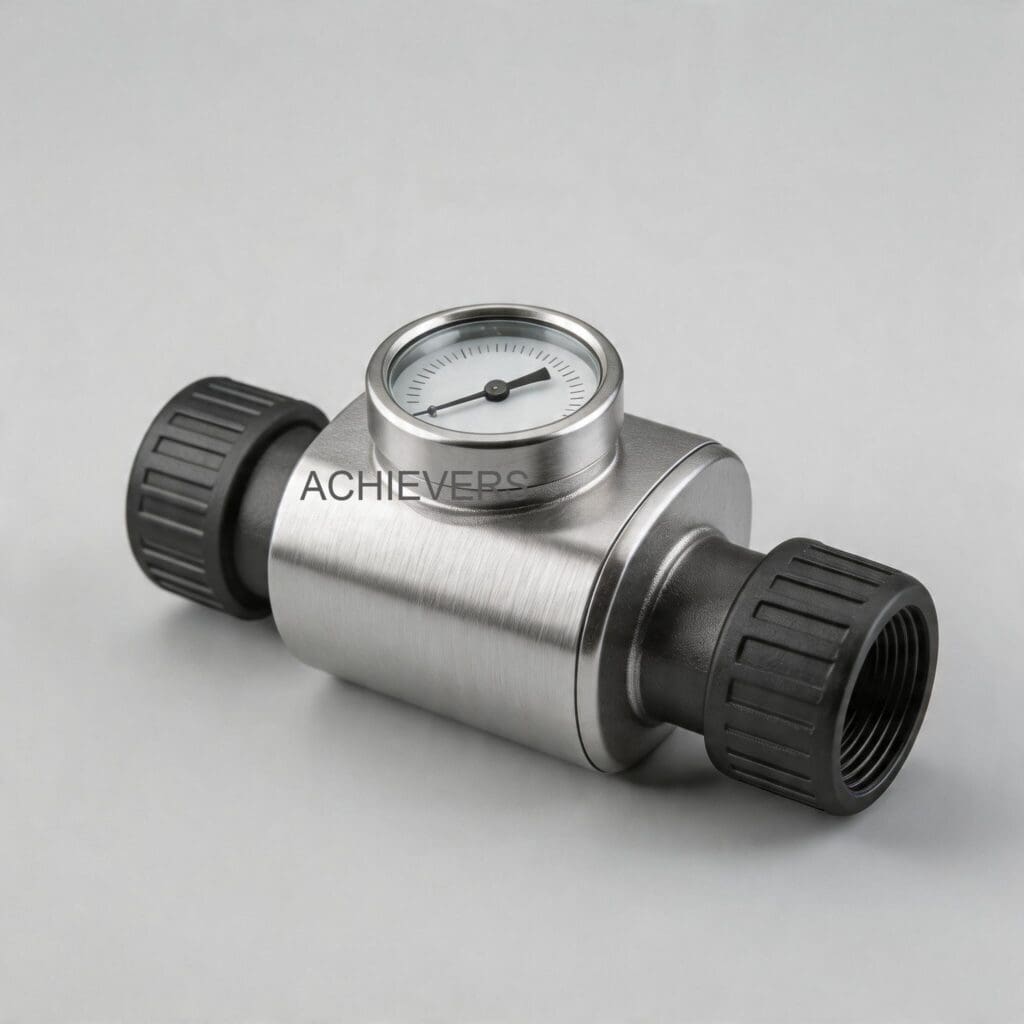
Specifying fluid measurement equipment for industrial applications leaves no room for guesswork. When dealing with variable viscosities, fluctuating temperatures, and hazardous site conditions, choosing the wrong Oil Flow Meter results in chronic drift, sudden pressure drops, and unacceptable operational downtime. You do not want to pull a meter off the line for recalibration every three months.
This buyer’s guide cuts through standard spec sheets to focus on what actually dictates performance in the field. We will break down how to choose an oil flow meter for viscous oil applications based on engineering fundamentals. Whether you need an oil flow meter selection guide in India or are sourcing equipment for a chemical plant in Europe, the physics of fluid dynamics and positive displacement measurement remain the same. The goal is simple: specify the right industrial oil flow meter specifications for manufacturers so you install it once and trust the data.
Quick Reference Checklist: Pre-Specification
- Determine minimum, normal, and maximum flow rates (LPH).
- Identify fluid viscosity at the lowest operating temperature.
- Confirm maximum line pressure and acceptable pressure drop.
- Verify required output signals (4-20mA, RS485 MODBUS).
- Ensure aluminum alloy construction is compatible with the fluid.
1. What Is an Oil Flow Meter and What Does It Do
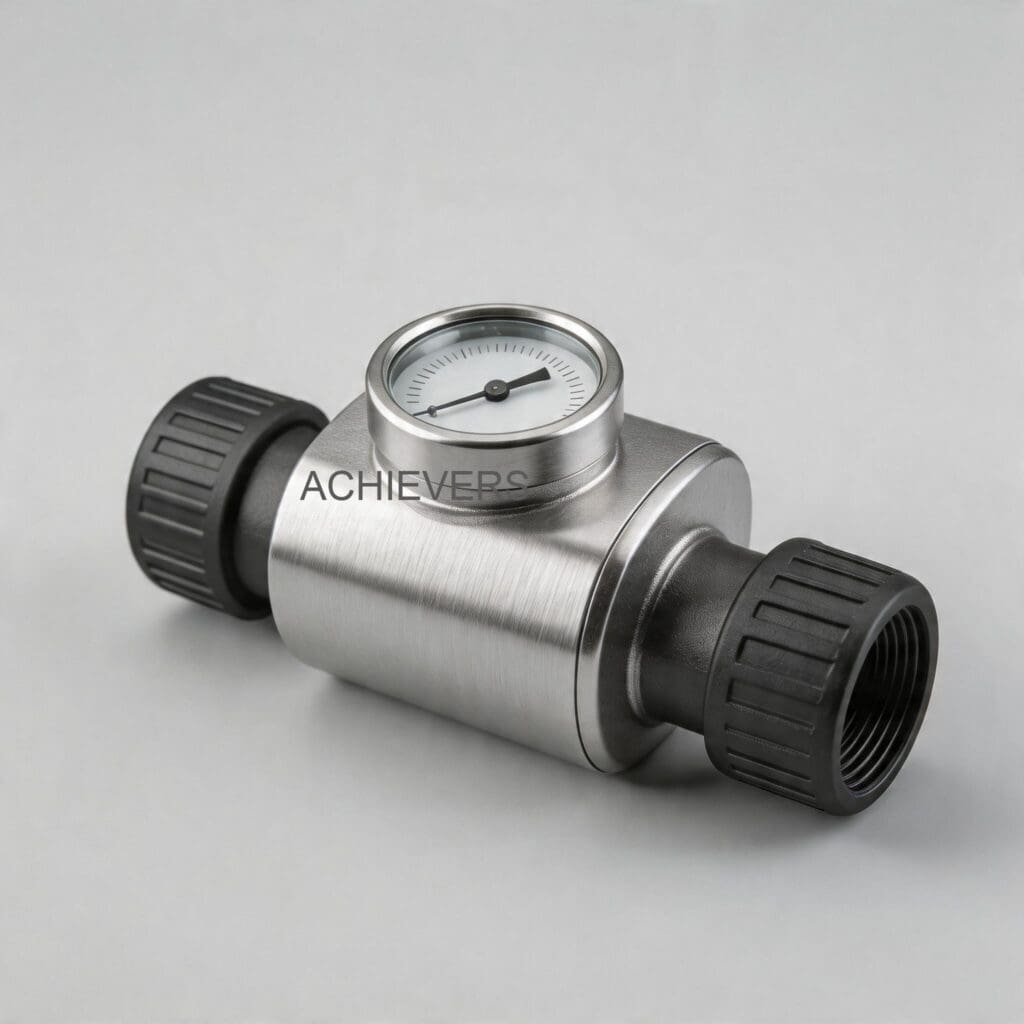
At its core, a highly accurate Oil Flow Meter relies on a positive displacement oval gear design. Unlike velocity-based meters that struggle with thick fluids, an oval gear meter thrives on high viscosity. As the fluid passes through the measuring chamber, it forces two precisely machined oval gears to rotate. Each rotation displaces an exact, isolated volume of liquid. By counting these rotations, the meter calculates the precise volumetric flow rate regardless of changes in fluid viscosity or upstream flow profile.
This mechanical robustness makes it the standard choice when you need to buy oil flow meter for boiler and generator fuel lines, shipping organizations, and heavy manufacturing facilities. The Oil Flow Meter is built for continuous industrial duty, integrating an electronic digital display with modern control outputs to feed directly into your plant's SCADA or automation system.
| Specification | Value | Notes / Application Impact |
| :— | :— | :— |
| Flow Range | 1.0 LPH to 24000 LPH | Scales from micro-dosing additives to bulk unloading. |
| Line Size | 6mm to 150mm (1/4 inch to 6 inch) | Low pressure drop allows gravity and in-line pump applications. |
| Accuracy & Repeatability | +/- 0.5% Accuracy; +/- 0.1% Repeatability | Consistent precision between calibration levels. |
| Temperature Rating | Up to 150 degrees Celsius | Specifically handles high-temperature Furnace Oil. |
| Outputs | Analog 4-20 mA, Serial RS485 MODBUS | Seamless integration into electronic control systems. |
| Construction | Aluminum Alloy | Lightweight, rust-proof, with integrated mesh strainer. |
2. Key Selection Criteria for Global Industrial Buyers
Sourcing the best oil flow meter for high viscosity oil requires matching site conditions with mechanical capabilities. You must evaluate the following six criteria before approaching an oil flow meter supplier.
Viscosity Handling and Flow Profile
Unlike turbine meters, oval gear meters do not require straight pipe runs before or after the installation point. They are unaffected by outside flow profile distortions caused by elbows or valves. When measuring heavy base oils or viscous additives, the internal clearances of the oval gears actually seal better, maintaining strict volumetric accuracy without slippage.
Operating Temperature Swings
Temperature dictates viscosity. If you are pumping furnace oil in freezing ambient conditions, the fluid's viscosity spikes, exponentially increasing resistance. Your meter must be rated for the application's maximum temperature (up to 150 degrees Celsius for furnace oils) while possessing the mechanical tolerances to prevent the gears from binding during extreme thermal expansion.
Pressure Drop Allowances
Every component in a fluid line creates a pressure drop. Because oval gear meters are driven by the fluid itself, highly viscous fluids require more energy to turn the gears. You must verify that the meter's pressure drop at your maximum flow rate and highest viscosity does not exceed your pump's capacity or restrict gravity-fed lines.
Pro Tip: Always size the meter based on your system's pressure budget, not just the pipe diameter. A slightly larger meter running at the mid-point of its flow range will yield a significantly lower pressure drop than a smaller meter running at its absolute maximum capacity.
Accuracy and Repeatability Verification
In process automation, repeatability is often more critical than absolute accuracy. If the meter is repeatable, control systems can offset the variance. Look for a repeatability specification of +/- 0.1% (or better than 0.02% in highly controlled environments). The step-less calibration system ensures that once dialed in, the accuracy remains consistent across the entire flow range.
Output Signals and Electronic Integration
A mechanical register is insufficient for modern automation. For lube oil blending plants or automated distribution depots (where you might also utilize a Fuel Dispenser), the meter must provide digital and analog outputs. Ensure the unit features an electronic digital display paired with an industry-standard 4-20 mA analog output and Serial RS485 MODBUS for direct PLC communication.
Serviceability and Maintenance Access
Industrial environments punish equipment. The meter must be designed for quick and easy maintenance. Features like a register top that can be removed and rotated every 90 degrees for optimal viewing, and an integrated mesh strainer to catch pipeline debris before it damages the gears, drastically reduce maintenance downtime.

3. Model and Variant Comparison
Because the oval gear positive displacement design is highly adaptable, variants are specified based on the fluid characteristics. Below is a breakdown of how the core specifications align with common industrial applications.
| Application Variant | Flow Range | Operating Temp | Key Feature | Best For |
| :— | :— | :— | :— | :— |
| Furnace & Heavy Oil | Up to 24000 LPH | Up to 150 C | Thermal expansion tolerance | Boilers, high-temp furnace oil lines, heaters. |
| Viscous Lube & Base Oil | 1.0 to 24000 LPH | Ambient to 80 C | High-torque gear ratio | Blending plants, additive dosing, lube loading. |
| Food-Grade Viscous Oils | 1.0 to 24000 LPH | Process Temp | Aluminum alloy hygiene | Vegetable cooking oils, food processing systems. |
| General Transfer | Up to 24000 LPH | Ambient | Low pressure drop | Gravity feeds, standard Diesel Flow Meter applications, shipping. |
4. Common Mistakes Buyers Make When Choosing
Even experienced plant engineers can overlook critical fluid dynamics when specifying positive displacement meters. Avoid these costly errors:
- Ignoring Temperature's Effect on Viscosity: Buyers often specify a meter based on the fluid's viscosity at standard room temperature. If the pipeline operates outdoors during winter, the fluid becomes drastically thicker, causing severe pressure drops and potentially stalling the gears. Always specify for the worst-case (lowest) temperature.
- Matching Pipe Size Instead of Flow Rate: Simply ordering a 2-inch meter because you have a 2-inch pipe is a critical error. If the flow rate is too low for a 2-inch meter, accuracy degrades. If it's too high, the pressure drop spikes. Always size the meter based on the actual LPH (Liters Per Hour) flow rate.
- Omitting the Upstream Strainer: Oval gear meters have tight internal clearances to maintain their +/- 0.5% accuracy. Welding slag, pipe scale, or debris will jam the gears instantly. Relying on an external strainer that might be bypassed is risky; utilizing a meter with a provided integrated mesh strainer guarantees protection.
- Neglecting Gravity Feed Limitations: Positive displacement meters require a minimum differential pressure to turn the gears. In low-head gravity applications, selecting a meter with too much internal friction will restrict the flow entirely.
- Failing to Specify Output Protocols: Assuming all electronic displays talk to all PLCs leads to integration nightmares. You must explicitly verify whether your control system requires a pulsed output, a 4-20 mA analog loop, or an RS485 MODBUS serial connection before procurement.
5. Enquiry Specification Checklist
To ensure your supplier provides exactly what your plant needs on the first try, follow this rigorous specification procedure. Gather these data points before requesting a quotation:
- Specify the Exact Fluid: Do not just say "oil." Define if it is furnace oil, mineral oil, vegetable cooking oil, or a hydraulic fluid.
- Determine the Viscosity Range: Record the viscosity in centistokes (cSt) at both the minimum and maximum operating temperatures.
- Map the Temperature Range: Note the absolute minimum cold-start temperature and the maximum operational temperature (e.g., up to 150 C).
- Calculate the Flow Rate Range: Identify your absolute minimum, normal operating, and absolute maximum flow rates in LPH.
- Establish Pressure Parameters: Define the maximum line pressure and the maximum allowable pressure drop across the meter.
- Define Connection Requirements: Specify the required line size (from 6mm to 150mm) and connection type (e.g., Flange type).
- Select the Output Signal: Choose between visual read-only, 4-20mA, or Serial RS485 MODBUS based on your automation needs.
- Confirm Calibration Units: State whether your site standardizes on Liters, US Gallons, or UK Gallons to ensure the digital display is factory-set correctly.
FAQ
Q: Can this meter be used in gravity-fed applications?
A: Yes. The oval gear design features a low pressure drop that accommodates both pump-driven (in-line) and gravity-fed applications, provided there is sufficient head pressure to overcome the meter's minimal internal friction.
Q: Do I need straight pipe runs before and after the meter?
A: No. Because this is a positive displacement meter that measures discrete volumes rather than fluid velocity, it is not affected by outside flow profile disruptions caused by elbows, valves, or installation constraints.
Q: What is the maximum operating temperature for furnace oil applications?
A: The high-temperature variant of this meter is engineered to accurately measure high-viscosity furnace oil at temperatures up to 150 degrees Celsius without the internal gears binding.
Q: How do I connect the meter to my plant's control room?
A: The electronic digital display is equipped with an analog 4-20 mA output as well as a Serial RS485 MODBUS output, allowing for seamless, real-time integration with modern PLC and SCADA automation systems.
Q: What happens if the display needs to be read from a different angle?
A: The register top is designed to be highly serviceable. It can be easily removed and rotated to any 90-degree orientation, ensuring clear visibility regardless of how the piping is configured.
Q: Is calibration difficult to maintain over time?
A: No. The meter utilizes a step-less calibration system that ensures accuracy remains highly consistent between calibration levels. It boasts a repeatability of +/- 0.1%, with standard accuracy at +/- 0.5% of the reading.
Q: What is the warranty on these industrial meters?
A: The meters come with a standard 1-year warranty. For facilities requiring extended coverage, a 2-year extended warranty is available on demand, backed by guaranteed spare parts availability.
Ready to upgrade your fluid handling accuracy and eliminate operational downtime? Contact our engineering team today with your specific LPH flow rate, fluid viscosity, and site temperature parameters to receive a precisely matched technical proposal and secure long-term operational reliability.