
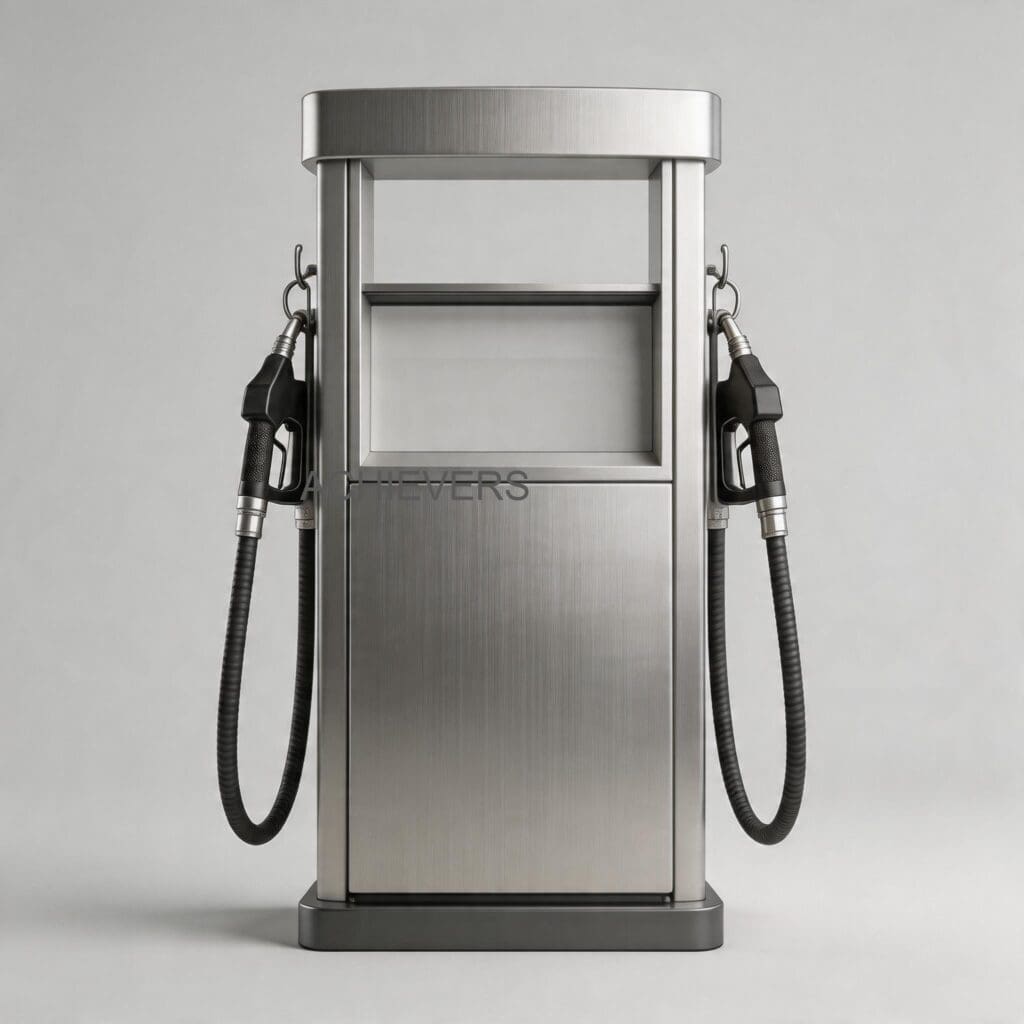
QUICK REFERENCE CHECKLIST: DAILY PREVENTIVE MAINTENANCE
- [ ] Inspect 4-meter rubber hose for blistering, cuts, or crushed sections.
- [ ] Check auto-shutoff nozzle for leaks at the swivel joint.
- [ ] Verify digital backlit display is functioning and free of error codes.
- [ ] Test the preset cutoff function with a small batch dispense.
- [ ] Listen for cavitation or unusual noise from the internal rotary gear/vane pump.
- [ ] Confirm micro-printer has paper and mechanism is clear of dust.
Unplanned downtime on a ईंधन डिस्पेंसर costs more than just the price of replacement parts; it halts fleet operations, delays production schedules, and leads to unaccounted fuel losses. When high-flow dispensing systems handle dirty diesel, operate in extreme temperatures, or face inconsistent power supplies, their core components degrade rapidly without intervention.
Preventive maintenance is not a recommendation; it is an operational requirement. By strictly monitoring inlet strainers, calibrating the positive displacement (PD) flow meter, servicing the air eliminator, and verifying the preset cutoff mechanisms, site operators can maintain +/- 0.5% metering accuracy and prolong equipment life. This guide delivers a field-ready maintenance schedule designed to eliminate unpredictable shutdowns.
1. Product Overview and Critical Wear Components
A commercial-grade ईंधन डिस्पेंसर is a fully integrated, demountable apportioning unit designed for harsh environments, from construction sites to chemical plants. Whether utilizing a hydraulically driven auxiliary gearbox P.T.O. or an electric motor (AC 440V/220V or DC 24V/12V), the mechanical stress remains high.
Critical wear components include:
- Inlet Strainer & Filters: The first line of defense against particulate matter. Blockages here cause pump cavitation.
- Air Eliminator: Crucial for metering accuracy. It bleeds off fluid-gas mixtures so the flow sensor only registers liquid volume.
- Internal Rotary Gear / Vane Pump: High-capacity pumps that degrade if run dry or subjected to abrasive fuel.
- Positive Displacement (PD) Flow Meter: Requires clean fluid to maintain its +/- 0.1% repeatability. Wear alters internal clearances and drifts calibration.
- Hose and Auto-Shutoff Nozzle: Subject to extreme mechanical abuse, dragging, and pressure spikes.
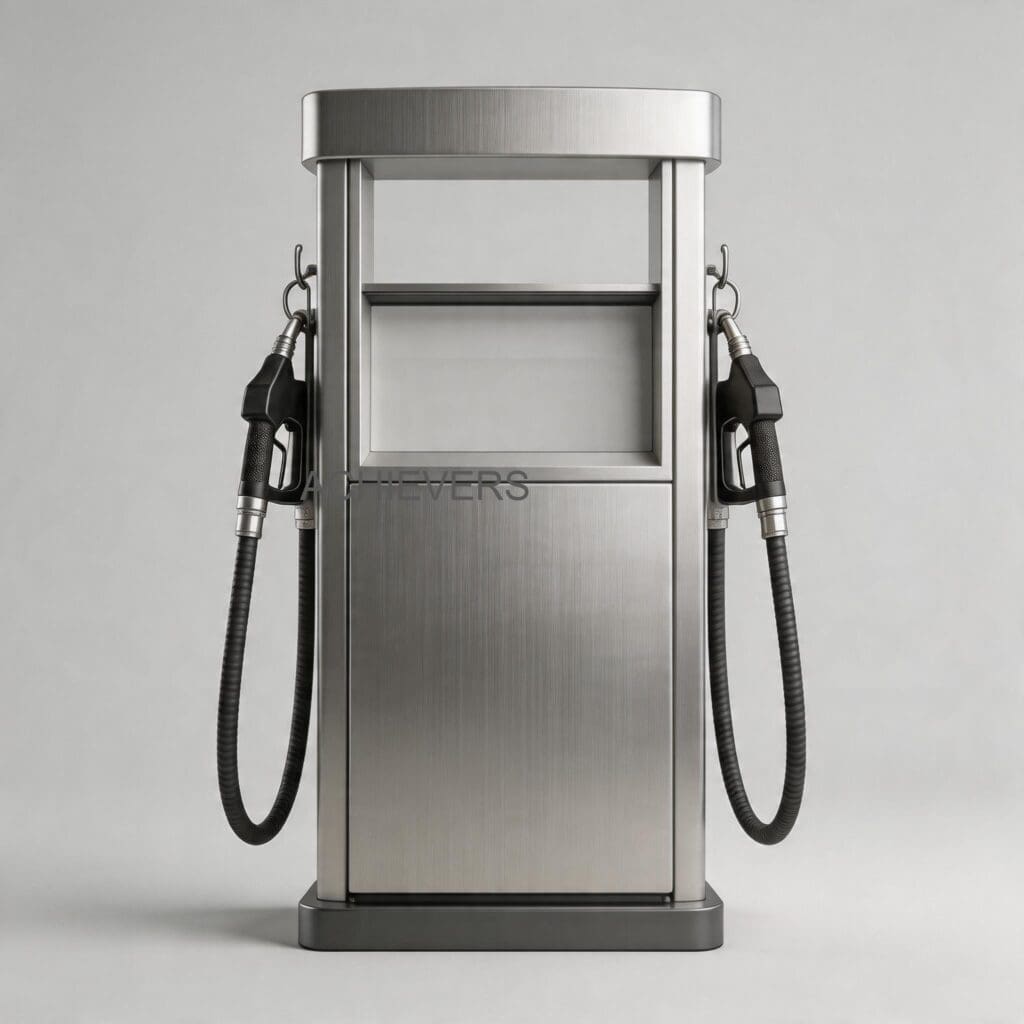
2. Preventive Maintenance Schedule
To maintain continuous 60 LPM flow rates and precise batch totalization, adhere to the following maintenance intervals.
| Task | आवृत्ति | Responsible | Est. Time | नोट्स |
| — | — | — | — | — |
| Visual leak inspection (hose, swivel, nozzle) | Daily | Operator | 5 mins | Look for weeping at crimped joints. |
| Display and micro-printer check | Daily | Operator | 2 mins | Ensure backlight works; verify paper roll. |
| Clean inlet strainer / filter | Weekly | Maintenance Tech | 15 mins | Critical for preventing pump cavitation. |
| Test preset batch cutoff accuracy | Weekly | Operator | 5 mins | Dispense known volume into a proving can. |
| Inspect air eliminator vent | Bi-Weekly | Maintenance Tech | 10 mins | Ensure vent isn't clogged with debris/dust. |
| Check pump drive belts/couplings | Monthly | Maintenance Tech | 15 mins | Adjust tension; look for fraying. |
| Calibrate PD Flow Meter | Quarterly | QA / Tech | 45 mins | Required to maintain +/- 0.5% accuracy. |
| Inspect internal pump vanes/gears | Semi-Annually | Lead Engineer | 60 mins | Check for abrasive wear or scoring. |
| Replace 4-meter rubber hose | हर साल | Maintenance Tech | 20 mins | Replace sooner if jacket is compromised. |
| Full system electrical/terminal check | हर साल | Electrician | 45 mins | Verify 12V/24V or 220V/440V connections. |
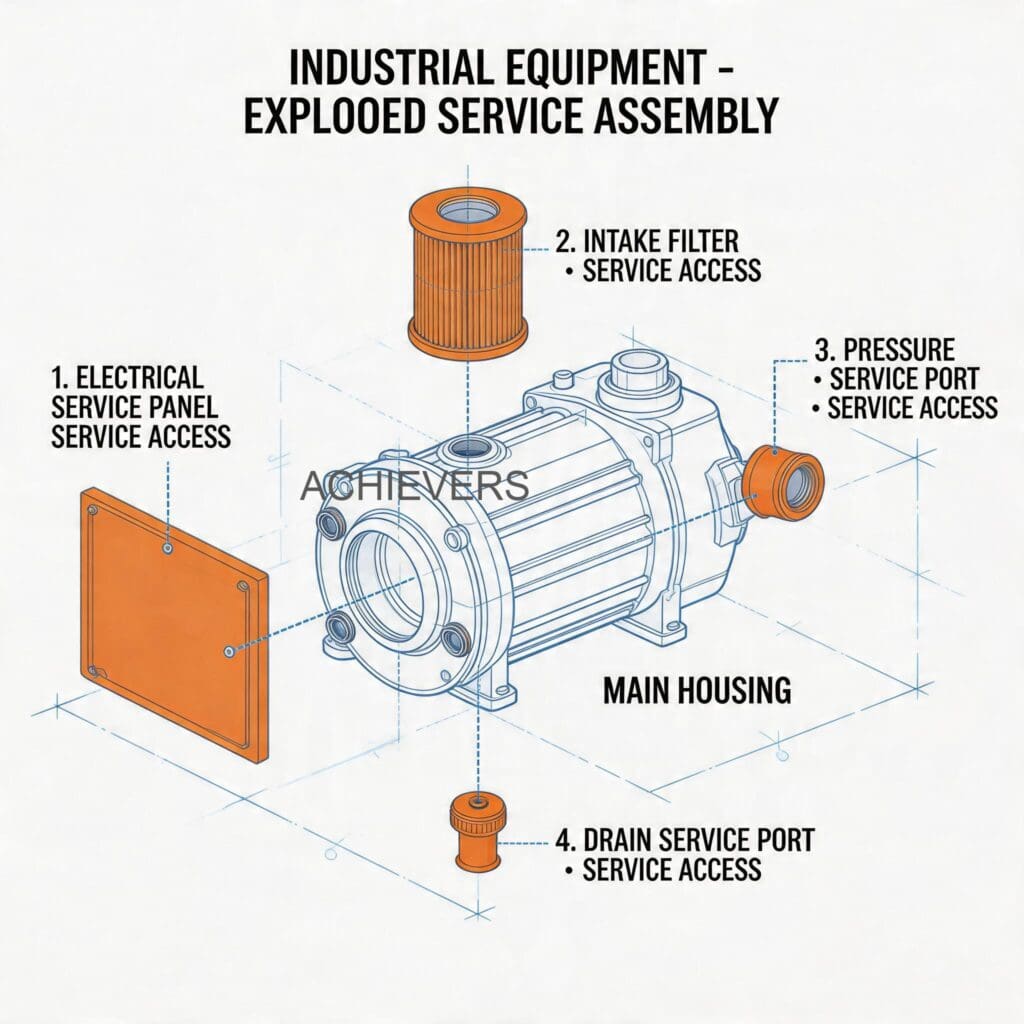
3. Step-by-Step Procedures for Key Tasks
RED FLAG WARNING:
Never bypass the air eliminator or operate the dispenser with a torn inlet strainer. Particulate bypass will score the internal walls of the positive displacement meter, permanently destroying its measuring accuracy and requiring a complete meter replacement.
Procedure 1: Inlet Strainer and Filter Cleaning
Clogged strainers restrict suction, starving the pump and causing destructive cavitation.
- Isolate Power: Disconnect the AC or DC power supply to the ईंधन डिस्पेंसर. Lock out the panel.
- Close Valves: Shut the primary isolation valve between the storage tank and the dispenser inlet.
- Relieve Pressure: Squeeze the dispensing nozzle into a safe container to bleed off residual line pressure.
- Access Strainer: Unbolt the strainer housing cover located upstream of the internal pump. Have a catch pan ready for residual fuel.
- Extract Element: Carefully remove the stainless steel mesh strainer basket. Inspect for tears.
- Clean: Wash the mesh in a parts washer with clean solvent. Use a soft bristle brush. Do not use wire brushes or compressed air that could warp the mesh.
- Inspect Seals: Check the housing O-ring. If flattened or cracked, replace it.
- Reassemble: Reinstall the strainer, secure the cover, open the isolation valve, and check for leaks upon power-up.
Procedure 2: Meter Accuracy and Preset Cutoff Verification
The digital resettable batch controller relies on pulse feedback from the flow sensor. Drift must be corrected using a volumetric proving can.
- Prepare Proving Can: Use an ISO-certified, calibrated 20-liter or 50-liter proving vessel. Ensure it is leveled and fully drained.
- Program Preset: Enter a preset volume on the dispenser keypad matching the proving vessel's exact capacity.
- वितरित करें: Lock the nozzle fully open and allow the auto-stop feature to trigger the shutdown.
- Allow Settling: Wait two minutes for froth to dissipate in the proving vessel.
- Read Meniscus: Check the fluid level against the graduated neck of the proving can.
- Calculate Error: If the mechanical reading deviates by more than +/- 0.5% from the true volume, calibration is required.
- Adjust Calibration: Access the electronic calibration menu on the controller (refer to OEM manual) and adjust the K-factor accordingly.
- Retest: Empty the proving can and repeat the preset dispense to verify the new calibration factor holds true.
4. On-Site Spare Parts to Stock
Waiting on replacement parts means idle equipment. Keep these consumables in local inventory to guarantee maximum uptime.
| Part | Type | Recommended Qty | When to Replace |
| — | — | — | — |
| Filter Elements / Strainer Mesh | Consumable | 3-4 | When pressure drops, or mesh is torn. |
| O-Ring & Seal Kit | Consumable | 2 sets | Annually, or if weeping occurs at joints. |
| Auto-Shutoff Nozzle | Fast-Wear | 1-2 | If latch fails, spout bends, or swivel leaks. |
| 4-Meter Rubber Hose | Fast-Wear | 1 | Upon visible jacket damage or deep abrasions. |
| Micro-Printer Paper Rolls | Consumable | 10+ | As depleted. |
| Internal Pump Vanes | Wear Part | 1 set | If flow rate drops significantly below 60 LPM. |
For heavy-duty metering in distinct bypass lines, consider stocking a backup डीजल फ्लो मीटर to avoid interrupting mainline operations during calibration cycles.
5. Diagnosing Maintenance-Related Failures
When a Fuel Dispenser faults out, the root cause is frequently a skipped maintenance task. Use this diagnostic matrix to troubleshoot efficiently.
| Failure Symptom | Missed Maintenance Task | Corrective Action |
| — | — | — |
| Flow rate drops well below 60 LPM | Strainer/Filter cleaning | Remove and clean inlet strainer; check for tank sludge. |
| Loud whining noise from pump housing | Filter cleaning / Leak check | Clear suction blockages; check for air ingress causing cavitation. |
| Meter dispenses more than display shows | Air eliminator inspection | Clean air eliminator vent; ensure gas is being purged before meter. |
| Preset cutoff fails to stop pump | Electrical/Terminal check | Inspect flow switch and solenoid valve wiring; clean solenoid diaphragm. |
| Fuel leaks from nozzle when off | Visual leak inspection | Replace auto-shutoff nozzle internals or replace unit entirely. |
| Display is blank or flickering | Electrical/Battery check | Verify 12V/24V battery voltage or AC line stability; check grounding. |

6. Extending Service Life in Global Harsh Conditions
Industrial sites spanning from offshore rigs to desert mining operations present extreme challenges. To ensure steady performance and long operational life, operators must account for environmental variables.
- Extreme Temperatures: In high ambient heat, diesel expands, and internal electronics can overheat. Ensure the dispenser's backlit display and micro-printer are shielded from direct, continuous UV exposure.
- Power Surges: For AC 220V/440V stationary installations, utilize industrial surge protectors. For mobile 12V/24V DC battery-powered units, ensure the vehicle's alternator is properly regulating voltage to prevent burning out the dispenser's electric motor.
- Dust and Particulates: In mining or construction environments, the air eliminator vent is prone to clogging. Wrap breather vents with a secondary dust-proof membrane.
- Fluid Contamination: High water content or microbial growth in fuel will corrode internal pump components. Use water-absorbing filters upstream of the dispenser.
Core Dispenser Specifications
| विनिर्देश | पैरामीटर |
| — | — |
| प्रवाह दर | Up to 60 LPM |
| Accuracy / Repeatability | +/- 0.5% Reading / +/- 0.1% Reading |
| बिजली आपूर्ति विकल्प | AC 440V/220V or DC 24V/12V |
| Standard Hose Length | 4 Meters (Rubber) |
| Pump Type | Internal Rotary Gear or Vane Pump |
अक्सर पूछे जाने वाले प्रश्न
Q: How often should I calibrate the positive displacement flow meter?
A: Under standard operating conditions, calibrate the meter quarterly. If the dispenser handles high volumes or highly abrasive fluids, verify accuracy monthly using a certified proving can.
Q: The pump is running, but no fuel is dispensing. What is the issue?
A: This usually indicates an airlock or a completely clogged inlet strainer. Check the bypass valve, clean the primary filter, and ensure the storage tank is not sitting below the pump's maximum suction lift capability.
Q: Why does the preset cutoff over-deliver by a few liters?
A: Over-delivery on a preset batch usually means the two-stage solenoid valve is failing to close quickly enough, or there is debris stuck in the valve diaphragm. Inspect and clean the solenoid assembly.
Q: Can I run the 12V DC mobile dispenser continuously?
A: DC battery-powered pumps generally have a specific duty cycle (e.g., 30 minutes on, 30 minutes off) to prevent motor overheating. Check your specific model's rating and avoid deadheading the pump.
Q: Is it safe to use this equipment in hazardous areas?
A: Flameproof motor variants and units meeting ATEX/UL hazardous area classifications are required for explosive atmospheres. Always verify the specific classification plate on the dispenser housing before deploying in Zone 1 or Zone 2 areas.
Q: The micro-printer is outputting blank receipts. How do I fix this?
A: Thermal micro-printers require thermal paper. Ensure the paper roll is loaded facing the correct direction and that the printer head is clean and free of dust or moisture.
Q: Why is the flow meter reading inaccurate despite recent calibration?
A: If the air eliminator is malfunctioning, a fluid-gas mixture enters the flow meter. PD meters measure total volume, meaning they will measure air bubbles as liquid fuel, resulting in falsely high readings. Service the air eliminator immediately.
Routine maintenance is the only proven method to safeguard accuracy and prevent expensive motor and pump burnouts. If your site requires a durable, high-accuracy Fuel Dispenser, or if you need to upgrade your existing infrastructure to handle complex preset batching, contact our technical team today. Let us know your target flow rate, fluid type, power availability, and site conditions, and we will engineer the precise dispensing solution for your facility.