

An unmaintained fuel bay is a massive leak in your site’s operational budget. At an industrial plant or construction site, fuel is often the highest consumable expense. When your डीजल डिस्पेंसर falls out of calibration or suffers downtime due to clogged filters, the costs compound rapidly. A minor ±1.5% measurement drift on a 10,000-liter daily throughput means you are losing 150 liters of diesel into thin air every single day—translating to a loss of over ₹4,00,000 monthly at current Indian fuel prices.
Preventive maintenance is not an administrative burden; it is your frontline defense against pilferage, measurement drift, and unplanned equipment failure. For Indian fleet managers and plant engineers, relying on a robust maintenance schedule ensures that equipment continues to operate reliably despite heavy dust, high ambient temperatures, and contaminated diesel. This guide delivers a field-first preventive maintenance schedule specifically designed for industrial fuel bays, covering what you need to check, clean, and calibrate to maximize equipment life.
1. Product Overview and Critical Wear Components
Your डीजल डिस्पेंसर is a precision instrument built for rugged environments. It integrates a positive displacement (P.D.) oval gear flow sensor, a high-capacity pump, and electronic preset controls to deliver high accuracy (±0.5%). Models like the CE-130 and the CE-204 (which features Metrology Approval by the Govt of India) are designed to handle harsh environmental conditions, but they possess specific internal components that experience mechanical wear over time.
Understanding the technical specifications of your equipment is the first step in identifying which components require regular attention.
| Feature / Component | तकनीकी विनिर्देश | Maintenance Implication |
| — | — | — |
| Flow Meter Type | Oval Gear P.D. Flow Sensor | Requires clean fuel; particulates can score gears and alter the fixed internal volume, skewing accuracy. |
| प्रवाह दर | 60 लीटर प्रति माह से 200 लीटर प्रति माह तक | High throughput means rapid filter loading. Monitor pump suction pressure to avoid cavitation. |
| शुद्धता | ±0.5% | Drift beyond this indicates sensor wear, bypass leaks, or air in the line. |
| कार्य का दबाव | 3 बार | Seals, O-rings, and the 4m rubber hose must be routinely checked for pressure leaks. |
| मोटर शक्ति | 0.375 किलोवाट | Low power draw is efficient, but vulnerable to Indian grid voltage drops. Needs clean cooling fins. |
| प्रवेश/निकास आकार | 25 मिमी | Restricting flow due to scale or sludge at these junctions forces the motor to overwork. |
| Dispensing Nozzle | Auto shut-off with metal gun | Internal venturi mechanism must remain unclogged by debris to guarantee reliable shut-off. |
| Counter Range | 0-9999 L (Batch), 0-9999999 L (Total) | Resettable batch and cumulative totaliser must be cross-checked against physical dip readings. |
The critical wear components in this setup are the reusable channels (strainers) that filter fuel before dispensing, the oval gears inside the flow meter, the mechanical seals in the 0.375 kW pump, and the auto shut-off nozzle mechanism. Routine maintenance prevents these parts from reaching failure states.

RED FLAG WARNING:
If your pump motor sounds like it is struggling (cavitation noise) or the delivery flow rate drops significantly below the rated 60 LPM, your internal reusable channels are severely clogged. Running the pump in this starved condition will burn out the 0.375 kW motor winding within days and void operational efficiency. Shut down and clean filters immediately.
2. Preventive Maintenance Schedule
A robust maintenance schedule prevents minor issues from escalating into complete operational shutdowns. Plant operators should strictly adhere to the following daily, monthly, and quarterly tasks, logging all findings in a dedicated service inspection register.
| Task | आवृत्ति | Responsible | Est. Time | नोट्स |
| — | — | — | — | — |
| Visual Inspection for Leaks | Daily | Pump Operator | 5 mins | Check brass fittings, 25mm inlet/outlet, and the 4m rubber hose for weeping. |
| Nozzle Auto-Shutoff Test | Daily | Pump Operator | 2 mins | Test functionality during the first fueling of the shift to prevent accidental tank overflow. |
| Totalizer Log Verification | Daily | Site Supervisor | 5 mins | Reconcile the cumulative totalizer reading against daily physical tank dips to detect pilferage. |
| Hose Wear & Tear Check | Weekly | Maintenance Tech | 5 mins | Inspect the 4m rubber hose for cracking, UV degradation, or flattening caused by vehicle run-overs. |
| Filter/Strainer Cleaning | Monthly | Maintenance Tech | 30 mins | Remove and clean the reusable channels. High-dust Indian environments may require bi-weekly cleaning. |
| Flow Rate Verification | Monthly | Maintenance Tech | 10 mins | Time a 50-liter dispense. If it takes much longer than 50 seconds (at 60 LPM), inspect the pump and filters. |
| Printer Maintenance | Monthly | Operator | 5 mins | Inspect the one-touch printer facility. Clean the print head and replace the long paper roll if nearing the end. |
| Electrical Terminal Check | Quarterly | Electrician | 15 mins | Tighten terminal block connections. Look for carbon deposits or corrosion from monsoon humidity. |
| Calibration / Accuracy Check | Quarterly | Metrology Tech | 45 mins | Dispense into a Legal Metrology-certified 20L proving measure. Calibrate if drift exceeds ±0.5%. |
| Motor & Pump Mount Inspection | Quarterly | Maintenance Tech | 15 mins | Inspect the 0.375 kW motor for excessive vibration. Tighten foundation bolts. Check for unusual bearing noise. |
| O-Ring & Seal Replacement | हर साल | Service Engineer | 2 hours | Preventative replacement of pump seals and flow meter O-rings before catastrophic failure occurs. |
| Tank Bottom Draining | हर साल | Maintenance Tech | 1 hour | Drain water and sludge from the main storage tank to prevent it from entering the डीजल डिस्पेंसर system. |
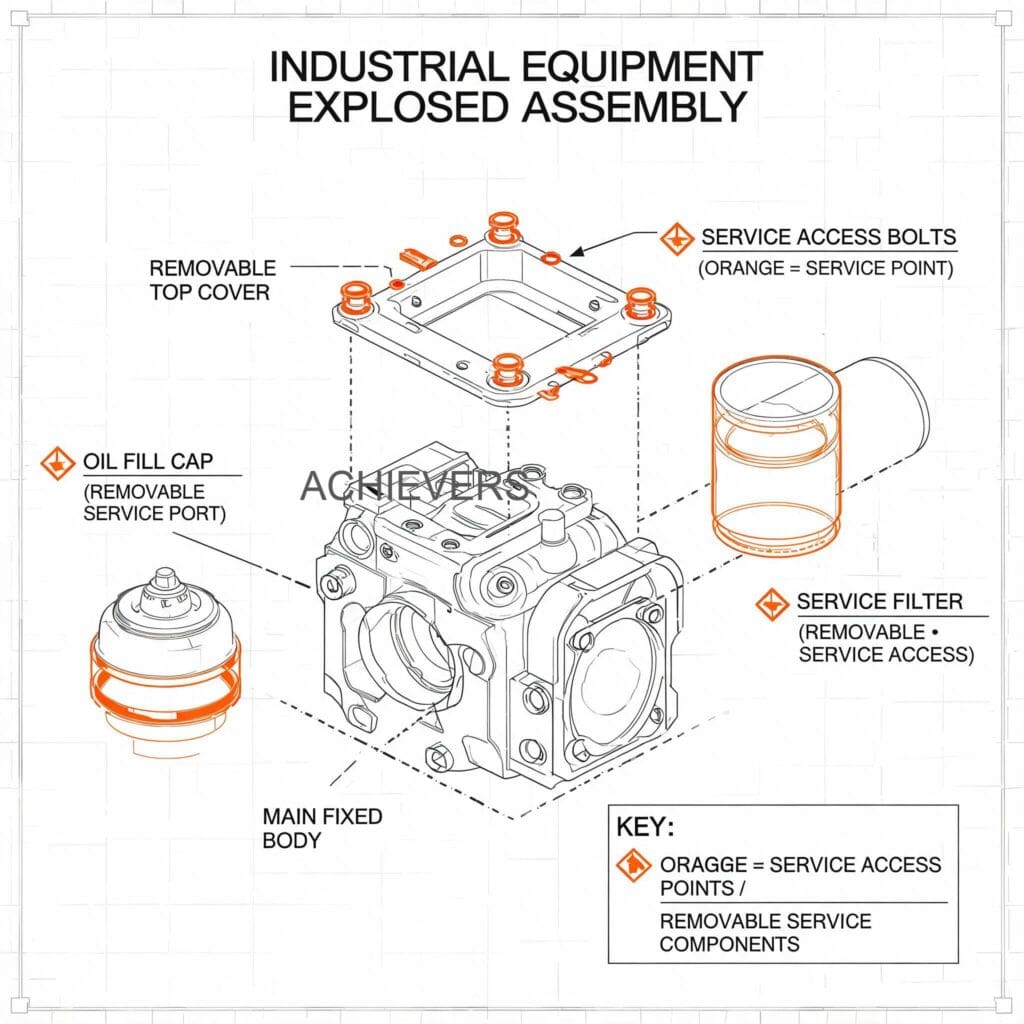
3. Step-by-Step Procedures for Key Tasks
Industrial maintenance requires strict adherence to standard operating procedures (SOPs). Haphazard servicing introduces contamination into the precision P.D. flow sensor, completely negating the ±0.5% precision.
Procedure 1: Reusable Filter and Strainer Cleaning
Indian diesel frequently contains suspended particulates, tank scale, and moisture. The large capacity reusable channels in these dispensers must be cleaned systematically.
- Isolate Power and Flow: Switch off the main power supply to the 0.375 kW motor. Apply Lockout/Tagout (LOTO). Close the main 25mm isolation valve from the bulk storage tank.
- Depressurize the System: Squeeze the auto shut-off nozzle into a collection bucket to release the 3 Bar internal working pressure.
- Locate and Open Filter Housing: Locate the primary strainer housing on the suction side of the pump. Use the correct size spanner to carefully remove the housing cover. Have oil-absorbent rags ready.
- Extract the Reusable Filter: Pull out the wire mesh strainer. Inspect it immediately for metal shavings (which indicate pump wear) or biological slime (which indicates fuel degradation).
- Clean with Approved Solvent: Do not use water. Wash the filter element in clean diesel or a commercial parts-cleaning solvent. Use a soft nylon bristle brush to dislodge stubborn debris. Never use a wire brush, which can alter the mesh micron size.
- Dry with Compressed Air: Blow compressed air from the inside out to ensure all microscopic particles are pushed back out the way they came in.
- Inspect and Lubricate O-Rings: Check the filter housing O-ring for pinching or cracking. Wipe it clean and apply a thin film of clean diesel or compatible grease before reseating.
- Reassemble and Bleed: Insert the filter, tighten the housing bolts in a star pattern to ensure even torque. Open the 25mm inlet valve, restore power, and dispense 5-10 liters into a bucket to purge any trapped air before resuming normal operations.
Procedure 2: Oval Gear Flow Sensor Inspection and Cleaning
If your batch totalizer shows erratic numbers, or calibration fails the ±0.5% tolerance test, the oval gear flow meter likely contains debris that is interfering with gear rotation.
- Complete System Shutdown: Follow LOTO procedures. Shut all inlet valves and relieve the 3 Bar system pressure via the nozzle.
- Disconnect the Sensor Module: Carefully disconnect the wiring harness leading from the P.D. Flow Sensor to the electronic display head. Tag the wires to ensure correct polarity during reassembly.
- Remove the Meter Cover: Unbolt the front faceplate of the oval gear flow meter. Keep the unit perfectly level to prevent the gears from sliding out unexpectedly.
- Extract the Oval Gears: Note the exact orientation of the gears. One gear usually has a magnetic insert to trigger the pulse sensor—it must go back in the exact same orientation. Carefully lift the gears out of the measuring chamber.
- Inspect the Measuring Chamber: Shine a flashlight into the chamber. Look for scoring or deep scratches on the chamber walls. Scratches allow diesel to bypass the gears, leading to under-reading.
- Clean the Gears and Chamber: Submerge the oval gears in clean diesel. Wipe the measuring chamber with a lint-free cloth. Remove any hard particulate matter or sludge buildup.
- Check Gear Spindles for Wear: Ensure the gears rotate freely on their spindles without excessive lateral play. If the spindle is heavily worn, the entire flow meter block may require replacement.
- Reassembly and Recalibration: Reinstall the gears in their correct orientation. Replace the faceplate gasket/O-ring with a new one. Torque bolts evenly. Reconnect the wiring, restore flow, and perform a mandatory calibration test using a certified proving measure.
4. On-Site Spare Parts to Stock
Supply chain delays shouldn't cause extended downtime at a busy petrochemical or mining site. Ensure your maintenance store stocks the following critical spares for your dispenser setup.
| Part Description | Component Type | Recommended Stock Qty | When to Replace |
| — | — | — | — |
| Filter Element / Strainer Mesh | Consumable | 2 units | Replace if mesh is torn, crushed, or permanently blinded by heavy sludge. |
| 4m Rubber Hose (25mm) | Wear Part | 1 unit | Replace immediately if you detect bulges, deep cracks, or if the internal lining breaks down. |
| Auto Shut-Off Nozzle | Wear / Mechanical | 1 unit | Replace if the auto-shutoff fails to trigger or if the spout gets severely bent. |
| Viton O-Ring Kit | Seal | 2 sets | Use during every major inspection, housing removal, or when weeping is detected. |
| Printer Paper Rolls | Consumable | 10 rolls | Replace when the current roll shows the red indicator line. |
| P.D. Flow Sensor Gears | शुद्धता | 1 set | Replace if calibration cannot be achieved or if deep scoring is evident on the gears. |
| Motor Capacitor / Relay | Electrical | 1 unit | Replace if the 0.375 kW motor hums but fails to start due to Indian grid voltage drops. |
5. Diagnosing Maintenance-Related Failures
Even with rigorous preventive schedules, operators may encounter sudden faults. The key is tracing the symptom back to the specific missed maintenance task. Understanding these correlations allows for rapid corrective action.
| Failure Symptom | Most Likely Cause / Missed Maintenance Task | Corrective Action |
| — | — | — |
| Dispenser runs but delivers no fuel | Empty tank, closed valve, or completely blocked primary strainer. | Check physical tank dip. Open all 25mm inlet valves. Execute Filter Cleaning (Procedure 1). |
| Flow rate drops from 60 LPM to <30 LPM | Partial blockage in reusable channels or failing 0.375 kW motor. | Clean filter mesh. Check motor voltage and inspect pump vanes/gears for excessive wear. |
| Calibration drift (delivering more/less than display shows) | Wear in oval gear flow meter or debris lodged in gears. | Execute Sensor Inspection (Procedure 2). Recalibrate using a certified 20L measuring can. (See related डीजल फ्लो मीटर guides). |
| Fuel leaks from pump housing | Worn mechanical seals or degraded O-rings. | Isolate pressure. Replace the main pump casing seals and check for shaft wear. |
| Auto shut-off nozzle fails to stop overfill | Blocked venturi tube inside the nozzle spout. | Clean the small sensor hole at the tip of the metal gun nozzle using compressed air. |
| Electronic display goes blank or flickers | Loose terminal block wiring or power surge damage. | Inspect and tighten electrical connections. Verify stabilizer/UPS is providing clean power to the preset board. |

6. Extending Service Life in Indian Conditions
Operating industrial fuel transfer solutions in India presents a unique set of engineering challenges. To maximize the operational life of your dispenser and ensure compliance with PESO and Legal Metrology standards, implement these site-specific adaptations:
Managing Heat and Voltage Fluctuations
In extreme summer temperatures reaching 45°C+, diesel expands and internal electrical components run hot. The 0.375 kW motor is sturdy, but frequent brownouts or phase imbalances can cause it to draw excessive current, degrading the winding insulation. Install a dedicated voltage stabilizer and a contactor with thermal overload protection at the electrical panel. Ensure the dispenser is installed under a canopy to protect the electronic preset display and keypad from direct UV degradation.
Combating Dust and Monsoon Humidity
At construction sites or mining bays, fine dust coats internal linkages and clogs motor cooling fins. Use compressed air weekly to blow out the internal cabinet. During the monsoon season, high humidity can cause condensation inside the electronic enclosures. Place industrial-grade silica gel desiccant packs inside the electronic head and replace them quarterly to prevent the one-touch printer facility and batch totaliser circuit boards from corroding.
Handling Contaminated Fuel and Water Ingress
Indian supply chains sometimes deliver diesel containing water or adulterants. Water in diesel causes instant rust inside the internal steel components and supports microbial growth ("diesel bug") that turns into a black slime, completely choking the reusable channels. Implement a strict fuel management protocol: drain water from the bottom of your main storage tanks weekly. Consider installing a dedicated water-absorbing bulk filter upstream of the dispenser’s 25mm inlet to protect the precision oval gear flow meter.
QUICK REFERENCE: Operator Daily Walk-Around
- [ ] Check 4m rubber hose for run-over damage.
- [ ] Verify 25mm inlet/outlet brass fittings are dry (no weeping).
- [ ] Check printer paper level.
- [ ] Ensure electronic totaliser reading matches end-of-shift dip.
- [ ] Test the metal gun auto-shutoff on the first vehicle.
- [ ] Listen for smooth motor operation (no cavitation whining).
अक्सर पूछे जाने वाले प्रश्न
Q: How often do I need to calibrate my diesel dispenser?
A: Under the Indian Legal Metrology Act, commercial dispensing units require annual stamping and calibration. However, for internal industrial use, we recommend a quarterly calibration check using a certified 20L proving measure, especially if you handle high volumes of fuel.
Q: The flow rate has slowed down dramatically over the last week. Do I need a new pump?
A: Usually, no. A sudden drop in flow rate on a 60 LPM system is almost always caused by clogged internal reusable filters or a blocked upstream strainer. Clean all filters thoroughly before considering pump replacement.
Q: Can I use this dispenser for high-viscosity lubricating oils?
A: No. This dispenser, equipped with a specific oval gear flow meter and 0.375 kW motor, is calibrated and powered specifically for diesel and biodiesel viscosities. Using high-viscosity oils will overwork the motor and rupture seals. For oil applications, consider a dedicated तेल प्रवाह मीटर setup.
Q: What should I do if the one-touch printer stops printing receipts?
A: First, check if the paper roll is empty or jammed. Second, verify the thermal print head is free of dust and grease. Wipe it gently with an isopropyl alcohol swab. If it still fails, check the ribbon cable connecting the printer to the main control board.
Q: Why does the batch totalizer show fuel dispensed when the nozzle is closed?
A: This "ghost dispensing" indicates fluid expansion inside the hose due to extreme ambient heat, or a passing internal valve allowing slight reverse flow. Check your system's non-return valve (NRV) and ensure the hose is depressurized when not in use.
Q: Is the auto shut-off nozzle adjustable?
A: The sensitivity of the auto shut-off metal gun is generally fixed based on the internal venturi vacuum. If it becomes too sensitive (shutting off constantly during dispensing), ensure the spout is inserted fully into the tank neck and the sensor hole at the tip is clear of debris.
Q: Are these dispensers suitable for 12V or 24V DC mobile bowsers?
A: Yes, while the standard industrial bay units run on AC power, there are 12V and 24V DC Diesel Fuel Dispenser models available specifically designed for tanker and lorry diesel dispensing. The maintenance principles remain identical, with the addition of strict battery terminal cleaning.
Proper maintenance prevents minor wear from becoming catastrophic failure. If your site requires an upgrade to a high-accuracy system with metrology approval, or if you need expert advice on scaling up your fuel handling infrastructure to accommodate larger fleets, reach out to our team. Contact Chintan Engineers with your specific flow requirements and site conditions, and we will configure a dispensing solution built for uncompromising performance.