
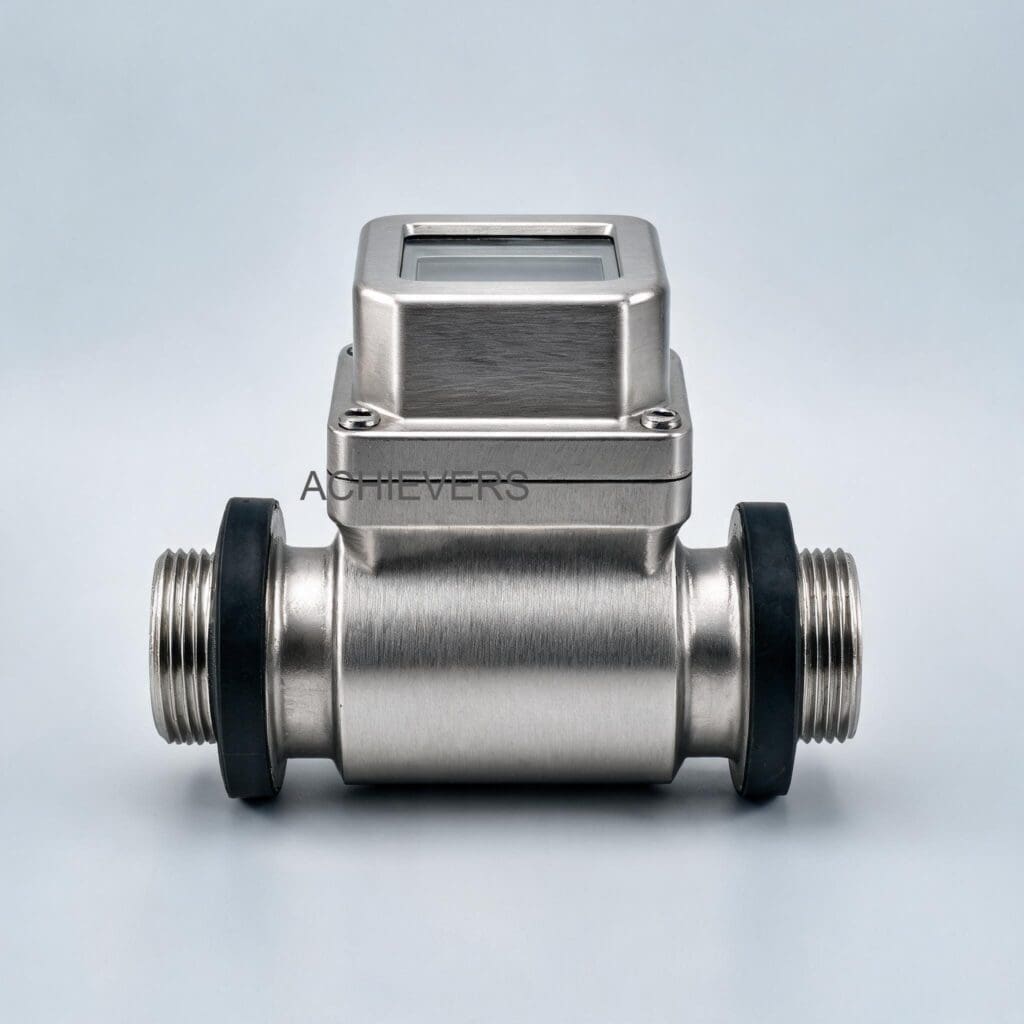
Inaccurate diesel measurement is a direct drain on your operational budget. Whether you are managing fleet fueling, maintaining standby power for a pharmaceutical plant, or feeding a continuous process line, a 1% error on a ₹5,00,000 monthly diesel bill costs you ₹60,000 annually. Choosing the wrong डीजल फ्लो मीटर doesn't just skew your inventory; it disrupts building management system (BMS) integration, causes flow restrictions on pump skids, and leads to chronic maintenance issues in harsh Indian site conditions.
This guide provides a field-first selection checklist for Indian industrial buyers—from plant managers to procurement heads. We bypass the theoretical and focus on matching meter types, line sizes, and electronic outputs to real-world applications. By following this framework, you will prevent common procurement failures: incorrect sizing, air-handling blind spots, and unusable signals for your automation infrastructure.
QUICK REFERENCE: DIESEL METER SELECTION CHECKLIST
- Line Size: Matches pipe diameter (1/2" to 4") without requiring excessive reducers.
- Flow Range: Operating flow falls comfortably between 20% and 80% of the meter's maximum capacity.
- शुद्धता: Verified +/- 0.5% precision with Legal Metrology approval if used for custody transfer.
- Pressure Limit: System pressure does not exceed 50 psi / 3.5 bar.
- Outputs: 9×4 digit electronic counter with required pulse/analog signals for SCADA/BMS.
1. What Is Diesel Flow Meter and What Does It Do
A डीजल फ्लो मीटर is a highly calibrated volumetric measurement device designed to track the exact quantity of diesel, biodiesel, or solvents moving through a transfer line. At its core, the meter translates fluid motion into quantifiable data, either mechanically or electronically. When installed on pump skids, DG set day-tank refill lines, or fleet dispensing stations, it serves as the primary cash register and inventory control checkpoint for your fuel.
Our equipment utilizes cutting-edge internal designs to ensure measurement remains independent of fluid viscosity changes, which is critical during Indian temperature fluctuations where diesel viscosity shifts from cold winter mornings in Delhi to peak summer heat in Chennai.
| विनिर्देश | कीमत | Application Note |
| :— | :— | :— |
| शुद्धता | +/- 0.5% | Industry standard for internal fuel tracking and DG set monitoring. |
| Diameter Range | 1/2" to 4" inches | Scalable from small generator feed lines to high-volume bulk transfer skids. |
| Viscosity Handling | 8 to 5000 mPas | Viscosity-independent performance; easily handles standard diesel, biodiesel, and heavy oils. |
| परिचालन दाब | Up to 50 psi / 3.5 bar | Ideal for standard transfer pumps and gravity-fed systems. |
| डिस्प्ले इंटरफ़ेस | 9×4 digit Electronic Counter | Provides both real-time flow rate indication and totalized flow (resettable). |
| Vibration Resistance | उच्च | Crucial for mounting directly on skid frames next to heavy positive displacement pumps. |
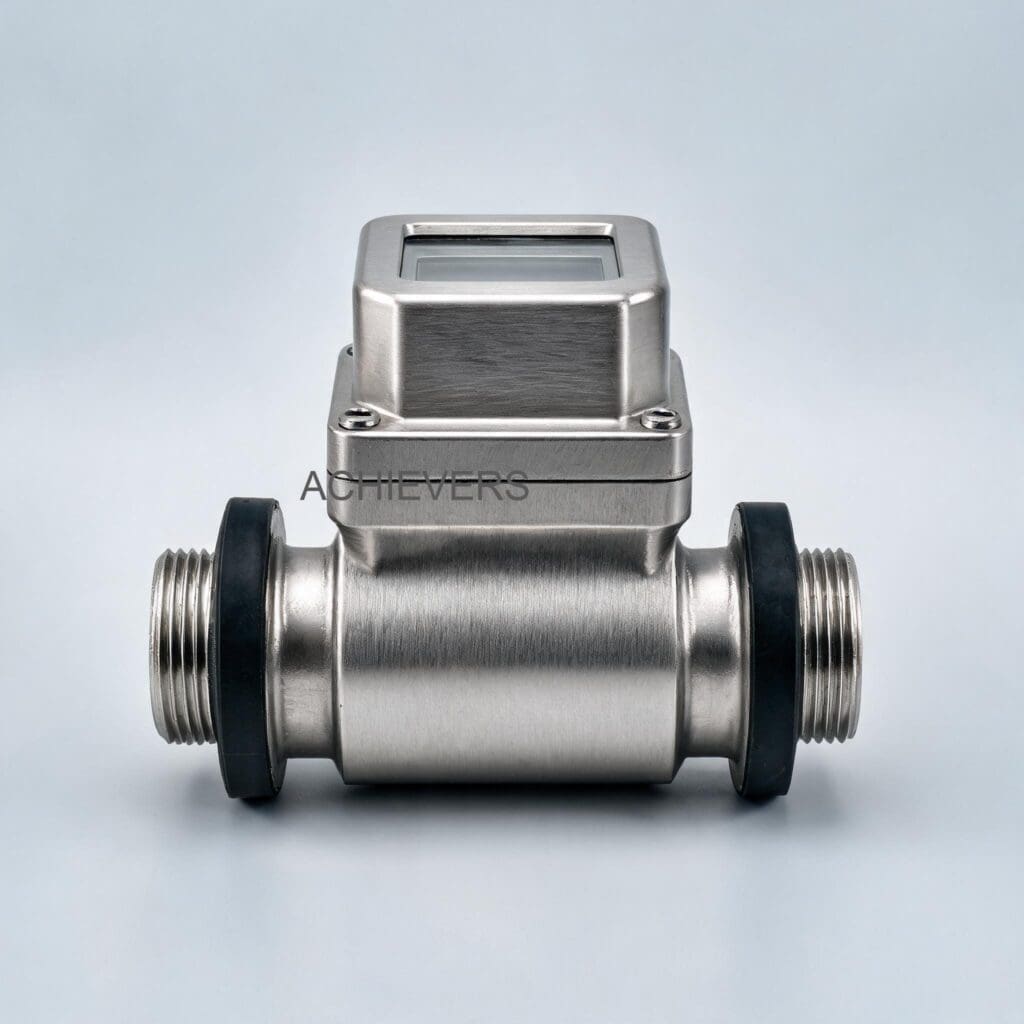
2. भारतीय औद्योगिक खरीदारों के लिए प्रमुख चयन मानदंड
Procuring a डीजल फ्लो मीटर based purely on pipe diameter is a guaranteed path to system failure. Indian industrial environments present unique challenges: extreme ambient heat, heavy particulate dust, erratic grid power, and highly variable fuel quality. You must evaluate the following criteria before issuing a PO:
- Flow Rate Profiling: Do not size the meter based solely on the pipeline size. Size it based on the pump's actual output. If a DG set refill pump pushes 60 LPM, select a meter where 60 LPM sits in the middle of its optimal operating range. Running a meter constantly at its maximum threshold accelerates component wear.
- Pressure Drop Allowances: Every flow meter introduces a pressure drop. Our meters handle up to 50 psi (3.5 bar). If you are relying on a gravity-feed system with minimal head pressure, an incorrectly chosen meter will choke the flow entirely, starving your fleet or generators.
- Viscosity Independence: Adulterated fuel or temperature shifts change diesel's viscosity. You require a meter that remains accurate across a wide band. A meter rated for 8 to 5000 mPas ensures that whether you are pumping standard HSD or thicker biodiesel blends, your accuracy remains locked at +/- 0.5%.
- Automation and Output Signals: Standalone mechanical dials are obsolete for modern plants. You need a 9×4 digit electronic counter. More importantly, confirm that the meter can integrate with your PLC, SCADA, or fleet management system via pulse outputs to enable automated shut-offs and remote monitoring.
- Vibration and Environmental Durability: Pump skids vibrate violently. DG sets create resonance. The meter must feature "High Vibration Resistance" to prevent the electronic counter from failing or mechanical internals from misaligning over time.
- Statutory and Quality Compliances: If fuel changes ownership (custody transfer), the meter must comply with the Legal Metrology Act. Even for internal use, ensure the equipment is built to withstand PESO (Petroleum and Explosives Safety Organisation) regulated zone requirements where applicable.
RED FLAG WARNING:
Never install a flow meter without a preceding Y-strainer or micro-filter. Indian diesel frequently contains suspended rust from old tankers and silica dust. A single large particulate can jam the precision internals of a positive displacement flow meter, destroying the unit instantly.
3. मॉडल और वेरिएंट की तुलना
Diesel flow meters come in multiple configurations to suit specific site demands. To match your application perfectly, review how the different available variants line up. If your application handles a wider variety of petroleum products, you might also consider a broader ईंधन प्रवाह मीटर setup.
| Model Variant | Connection Size | Primary Feature | इसके लिए सबसे उपयुक्त |
| :— | :— | :— | :— |
| High Accuracy Electronic | 1/2" to 4" Flange | 9×4 digit electronic counter, resettable | DG set day-tank automation, BMS-integrated plant monitoring. |
| Ticket Printer Model | 1" to 4" Flange | Integrated receipt printing | Fleet fueling stations, mining vehicle dispatch, shift-wise fuel auditing. |
| Biodiesel Variant | 1/2" to 4" Flange | Viscosity handling up to 5000 mPas | Alternative fuel processing, chemical dosing, heavy oil transfer. |
| Standard Flange Type | 1/2" to 4" Flange | High vibration resistance | Heavy-duty pump skids, rugged construction site fuel bowsers. |
4. भारतीय खरीदारों द्वारा खरीदारी करते समय की जाने वाली आम गलतियाँ
Even experienced engineers make costly procurement errors when specifying fluid handling equipment. Avoid these frequent missteps:
- Ignoring Air Elimination: Flow meters measure volume, not liquid. If your pump sucks in air due to a cavitation issue or an empty underground tank, the meter will read that air as diesel. Without an air eliminator installed upstream, you will pay for "ghost fuel" that never reached your tank.
- Buying for the Pipe, Not the Flow: Specifying a 3-inch meter just because the existing pipe is 3 inches is a classic mistake. If the actual flow rate is only 50 LPM, a 3-inch meter will barely register the movement, resulting in massive accuracy loss. Size the meter to the flow rate, and use pipe reducers if necessary.
- Overlooking the Display Orientation: Installing a meter in a tight pump skid only to realize the electronic counter is facing a wall or is upside down. Always verify if the register head can be rotated to match vertical or horizontal pipe configurations.
- Mismatching Complete System Capabilities: Buying a premium precision meter but pairing it with a cheap, pulsating pump. The irregular flow profile will destroy the meter's accuracy. If you are building a complete system, ensure synergy by utilizing a proper ईंधन डिस्पेंसर setup designed as a cohesive unit.
- Forgetting Line Pressure Limits: Standard meters in our range operate up to 50 psi / 3.5 bar. Installing this on a high-pressure line will blow the seals, causing hazardous environmental leaks and immediate equipment failure.
5. पूछताछ विनिर्देश चेकलिस्ट
To get an accurate quote and the right product on the first attempt, never just ask for "a diesel meter." Copy and paste this exact checklist into your RFQ (Request for Quotation) when contacting suppliers:
- Minimum and Maximum Flow Rate: Specify in LPM (Liters Per Minute) or KLPH (Kiloliters Per Hour).
- द्रव का प्रकार और श्यानता: State if it is standard High-Speed Diesel (HSD), Biodiesel, or another solvent. Note the viscosity (e.g., falls within 8-5000 mPas).
- Operating Line Pressure: Specify normal operating pressure and maximum pump deadhead pressure (must be under 3.5 bar).
- लाइन का आकार और कनेक्शन का प्रकार: State the pipe diameter (1/2" to 4") and specify flange standards (ANSI, DIN, or JIS).
- Required Accuracy Class: State the precision needed (e.g., +/- 0.5%).
- Display Requirements: Specify if you need the 9×4 digit electronic counter, and whether a resettable batch totalizer is required.
- Output Signals: Detail your automation needs (Pulse output, 4-20mA, Modbus) for BMS integration.
- Accessories Required: State if you need upstream Y-strainers, air eliminators, or ticket printers.
अक्सर पूछे जाने वाले प्रश्न
Q: Why is my new flow meter showing more fuel delivered than my tank actually holds?
A: This is almost always caused by entrapped air in the line being metered as fluid, or the absence of a backpressure valve allowing the line to drain backward. Install an air eliminator upstream of the meter.
Q: Can this meter handle high-viscosity fluids like furnace oil or biodiesel?
A: Yes. The meter is designed to be independent of viscosity variations and comfortably handles fluids ranging from 8 mPas up to 5000 mPas without losing its +/- 0.5% accuracy.
Q: What is the maximum pressure this equipment can withstand?
A: The standard operating pressure limit for these units is 50 psi, which translates to approximately 3.5 bar. Do not exceed this limit.
Q: Do I need a power supply for the electronic counter?
A: Yes, the 9×4 digit electronic counter requires stable power. Depending on the exact variant, it will either use long-life internal industrial batteries or require an external DC power feed integrated from your skid's control panel.
Q: How often does the meter require calibration?
A: In standard Indian industrial conditions pumping clean diesel, we recommend checking calibration once every 12 months. If the fuel has high particulate matter or you are operating 24/7, a 6-month verification cycle is safer.
Q: Is it safe to mount the meter directly on a vibrating pump skid?
A: Yes, these units feature high vibration resistance specifically engineered to survive being skid-mounted alongside heavy-duty positive displacement transfer pumps.
Q: What pipe sizes do these meters fit?
A: They are accessible in 1/2" to 4" inch diameters, covering everything from minor DG set day-tanks to major bulk transport unloading headers.
Ready to lock down your fuel inventory and automate your skid systems with uncompromising accuracy? Stop losing money to measurement errors and operational downtime. Contact Chintan Engineers today at sales@chintanengineers.in or call +91-9574992851 with your specific flow rate, line size, and automation requirements to get a custom technical proposal.