
Selecting equipment for remote industrial sites—mining pits, construction yards, offshore rigs, and agricultural hubs—leaves zero margin for error. When you are managing isolated assets, a failed pump or an inaccurate flow meter doesn’t just cause a minor inconvenience; it halts production and burns through operational budgets. You need robust, demountable dispensing units that withstand harsh elements while maintaining precise fluid accounting.
This guide details exactly how to choose a Fuel Dispenser for industrial sites where rough access and unpredictable power are the norm. We will strip away the marketing fluff and focus strictly on the engineering parameters that dictate performance: pump technology, flow capacity, power flexibility, and autonomous data capture.
QUICK REFERENCE CHECKLIST: SPECIFYING REMOTE DISPENSERS
- Power Availability: 12V/24V DC (battery/vehicle), 220V AC (mains/genset), or Auxiliary PTO Hydraulic.
- Flow Rate: Match to vehicle tank size (standard remote industrial target is ~60 LPM).
- Metering: Positive Displacement (PD) meter required for viscous fuels.
- Data Capture: Cloud data logging or micro-printer for receipt generation?
- Filtration: Inlet strainer and air eliminator are mandatory for mobile bowsers.
1. What Is a Fuel Dispenser and What Does It Do
An industrial Fuel Dispenser is an independent, demountable fuel apportioning unit engineered to deliver metered fuel to plant equipment, generators, and fleet vehicles in locations inaccessible to standard delivery tankers.
Unlike retail gas station pumps, remote dispensers are compact, horizontal metering units designed for rapid deployment on mobile bowsers, skid tanks, or stationary storage barrels. The system integrates a high-capacity pump (internal rotary gear or vane), a positive displacement flow meter, air eliminators, non-return valves, and dispensing hardware (hose reel, swivel, and auto-shutoff nozzle) into a single rugged frame.
| Specification | Value | Engineering Notes |
| :— | :— | :— |
| Max Flow Rate | Up to 60 LPM | Optimized for rapid diesel filling on standard industrial equipment. |
| Metering Accuracy | +/- 0.5% of reading | Achieved via high-precision Positive Displacement (PD) flow sensor. |
| Repeatability | +/- 0.1% of reading | Ensures consistent batch totals across thousands of cycles. |
| Power Options | 12V/24V DC, 220V AC, Hydraulic | Allows integration with vehicle alternators, gensets, or truck PTOs. |
| Hose Assembly | 4 Meter Rubber Hose | Standard reach; includes auto-shutoff nozzle and swivel joint. |
2. Key Selection Criteria for Remote Industrial Sites
Understanding industrial Fuel Dispenser specifications for manufacturers requires breaking down the dispensing cycle into its core components. Here are the six primary criteria you must evaluate for remote site deployment.
1. Pump Technology (Rotary Gear vs. Vane)
Your fluid dictates your pump. For standard diesel dispensing, rotary vane pumps offer excellent suction lift and flow characteristics. However, if you are operating in environments with fluctuating temperatures that affect fluid viscosity, a high-capacity internal rotary gear pump provides superior torque and consistent displacement.
2. Power Supply Flexibility
Remote sites rarely have clean, continuous 220V AC mains power. Your Fuel Dispenser must match the available power source:
- Mobile Bowsers: Require 12V/24V DC motors that trickle charge from the vehicle’s electrical system, or a hydraulic drive powered by the truck’s auxiliary gearbox PTO.
- Stationary Skids: Can utilize 220V AC if connected to a reliable site genset.
3. Air Elimination and Filtration
When pumping from a mobile bowser or sloshing tank, the fluid-gas mixture in the upstream hose can severely distort meter readings. A compact horizontal measuring unit equipped with an integrated air eliminator ensures that the total delivery volume remains highly accurate by venting air before it hits the flow meter. Built-in high-capacity strainers are also critical to protect the PD meter from rust and tank scale.
RED FLAG WARNING:
Never deploy a remote dispenser without an active air eliminator if you are pumping from a mobile tank. Without it, your positive displacement meter will measure and record the air passing through the lines as fuel, leading to massive inventory discrepancies.
4. Flow Rate Capacity
For standard construction and mining machines, a flow rate of up to 60 LPM strikes the right balance. It is fast enough to minimize equipment downtime during refueling, but controlled enough to prevent frothing and blowback in smaller generator tanks.
5. Dispensing Control: Presets and Printing
Accountability is the biggest challenge in remote fueling. A Fuel Dispenser with preset and printer buyer guide usually highlights the necessity of localized control. Look for a digital Fuel Dispenser that allows operators to enter a PRESET volume. Once the target is reached, the system automatically stops. Instant printed receipts via an integrated micro-printer provide immediate, hard-copy proof of delivery for contractors.
6. Telemetry and Data Logging
Paper tickets get lost in the mud. A modern Fuel Dispenser with cloud data logging for fleet fueling solves this by automatically transmitting batch totals, cumulative totalizer data, and timestamps to a central server. This enables real-time inventory management for off-grid operations.
3. Model and Variant Comparison
Because remote sites vary from static farm tanks to heavy-duty mining bowsers, selecting the right drive mechanism is paramount.
| Drive Configuration | Power Source | Best Suited For | Key Advantage |
| :— | :— | :— | :— |
| Hydraulic PTO Driven | Auxiliary Gearbox PTO | Heavy transport, large mobile tankers | High torque, zero electrical draw from truck battery, continuous duty. |
| DC Battery Powered | 12V / 24V DC | Demountable bowsers, pick-up truck tanks | Trickle charges from vehicle; perfect for highly mobile, off-grid sites. |
| AC Mains Powered | 220V AC | Stationary skid tanks, fixed genset fueling | Consistent voltage, ideal for permanent or semi-permanent installations. |
| Digital Smart Unit | Multi-voltage | Fleet yards, centralized mining depots | Incorporates cloud data logging, micro-printer, and preset batching. |
4. Common Mistakes Buyers Make When Choosing
Procurement teams without field experience often under-spec their equipment, leading to premature failure. Avoid these costly errors:
- Ignoring the Air Eliminator: Purchasing a bare-bones Diesel Flow Meter setup without an air eliminator for a mobile tank. The result is paying for "ghost fluid" (air) and failing inventory audits.
- Mismatching Power Supplies: Ordering 220V AC units for construction sites that only have 12V vehicle batteries available, rendering the dispenser useless without a dedicated, expensive generator.
- Skipping the Auto-Shutoff Nozzle: Relying on manual nozzles in remote sites. Operators get distracted, tanks overflow, and ground contamination results in heavy environmental fines.
- Sacrificing the Display Readability: Buying units with standard LCDs. Remote operations often run 24/7. Without a backlit digital display, night-shift fueling becomes inaccurate and dangerous.
- Forgetting Data Redundancy: Relying solely on mechanical totalizers in multi-contractor sites. Without resettable batch totalizers or instant receipt printers, fuel theft goes unnoticed.
5. Enquiry Specification Checklist
When reaching out to a global manufacturer or a Fuel Dispenser supplier in India for an international project, provide exact engineering parameters. Vague requests result in the wrong equipment. Use this 8-step checklist to spec your next unit:
- Application Type: Specify if the unit will be mounted on a mobile bowser, a stationary tank, or used for barrel dispensing.
- Fluid Characteristics: Confirm the fluid is diesel (or specify exact oil/fuel grade for viscosity considerations).
- Target Flow Rate: Request "Up to 60 LPM" or state your specific requirement.
- Power Availability: Explicitly state 12V DC, 24V DC, 220V AC, or Hydraulic PTO.
- Metering Precision: Demand a Positive Displacement (PD) meter with +/- 0.5% accuracy and +/- 0.1% repeatability.
- Filtration Requirements: Confirm the inclusion of a high-capacity inlet strainer and air eliminator.
- Data Output: Specify if you require a backlit display, preset functionality, a micro-printer, or cloud data logging capabilities.
- Accessories Included: Verify that the 4-meter rubber hose, swivel, and auto-shutoff nozzle are included in the assembly.
FAQ
Q: Can I use a standard AC dispenser on a mobile fuel bowser?
A: No, unless you have a dedicated, continuously running generator on the truck. Mobile bowsers should utilize 12V/24V DC systems powered by the vehicle's electrical system, or a hydraulic PTO drive.
Q: Why is a Positive Displacement (PD) meter better than a turbine meter for this application?
A: PD meters measure exact volumes of fluid by trapping it in rotating components. They are highly accurate (+/- 0.5%) for viscous fluids like diesel and are largely unaffected by flow profile disturbances, making them ideal for compact dispensers.
Q: What is the benefit of the preset dispensing feature?
A: The preset function allows the operator to input a specific volume (e.g., 200 liters) on the digital keypad. The dispenser automatically stops at that exact volume, preventing overfills and freeing the operator to perform visual inspections of the equipment during fueling.
Q: Does the equipment require a separate filtration system?
A: A high-quality industrial Fuel Dispenser comes with a built-in high-capacity inlet strainer and an air eliminator. However, for heavily contaminated remote storage tanks, an additional bulk filter upstream of the dispenser is highly recommended.
Q: What is the maintenance interval for the internal rotary gear pump?
A: With steady performance and minimum maintenance, the primary requirement is regularly cleaning the inlet strainer. The rotary gear pump itself is designed for long operational life and typically only requires vane or gear inspection annually, depending on fluid cleanliness.
Q: Can the dispenser handle data tracking for multiple contractors on one site?
A: Yes. By selecting a unit equipped with a micro-printer for instant receipts and cloud data logging, fleet managers can track every drop of fuel dispensed, cross-referencing batch totals to specific contractors or machines.
Q: Does the system come completely assembled?
A: Yes. These units are shipped as a complete dispensing arrangement including the pump, flow sensor, filter, hose reel, hose, swivel, and nozzle, ready for demountable installation.
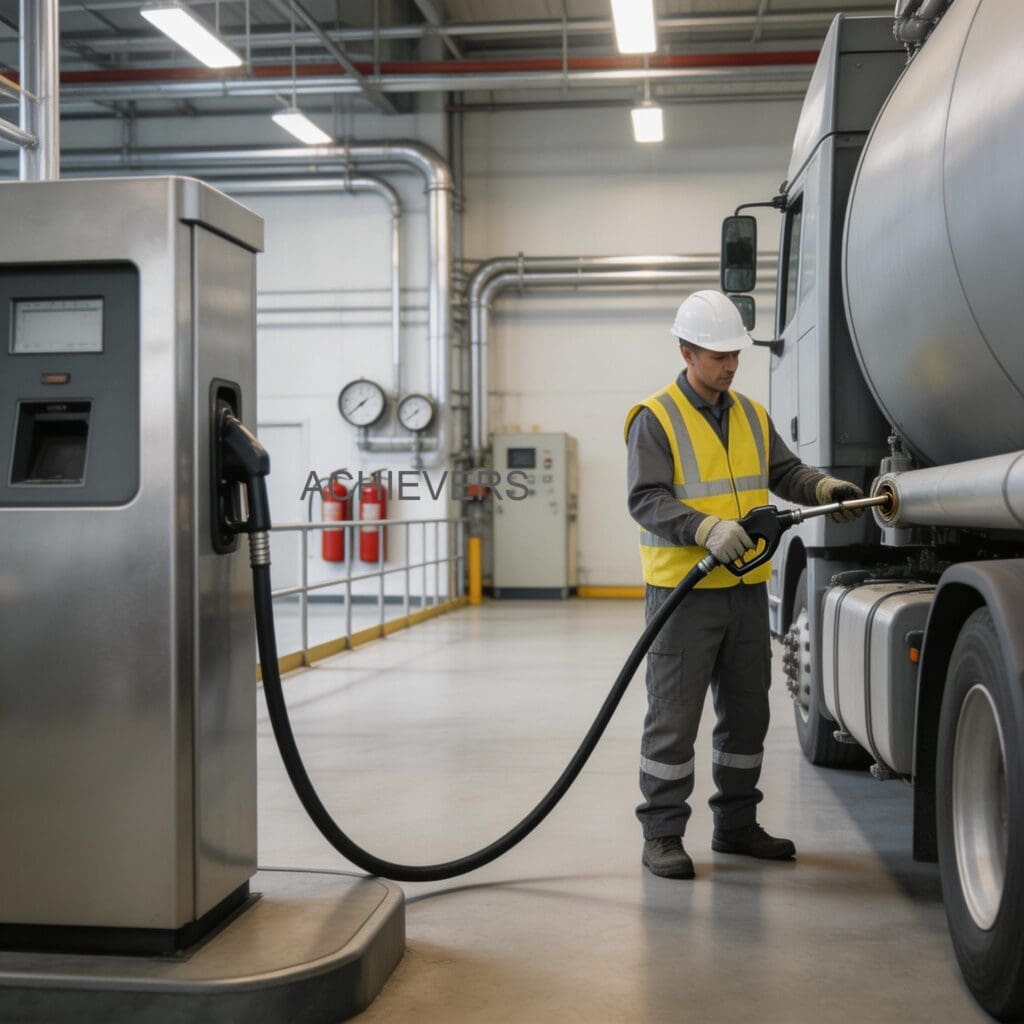
To stop fuel shrinkage and eliminate equipment downtime at your remote sites, you need dispensing hardware built for the realities of the field. Contact our technical sales team today to specify a Diesel Dispenser tailored to your operational environment. Please include your required flow capacity, available power supply, and data-logging requirements in your enquiry so we can configure the optimal system for your fleet.